

Converting from freewheel to cassette sounds straightforward until you realize it requires replacing your entire rear wheel or rebuilding it from scratch. Most e-bike riders discover this after they’ve already ordered a cassette and cassette-specific shifters, only to find their hub motor has a threaded freewheel hub that cannot accept a cassette freehub body. The confusion costs riders hundreds in wrong parts and wasted time. This guide explains what’s actually possible, what requires a complete wheel replacement, and when conversion makes financial sense versus just sticking with your current freewheel setup.
Before You Start: Check What You Actually Have
The most expensive mistake is buying cassette parts when you have a freewheel hub. These systems are completely incompatible at the hub level, not just at the cog level. Take two minutes now to verify which system you have before ordering anything.
The 30-Second Identification Test
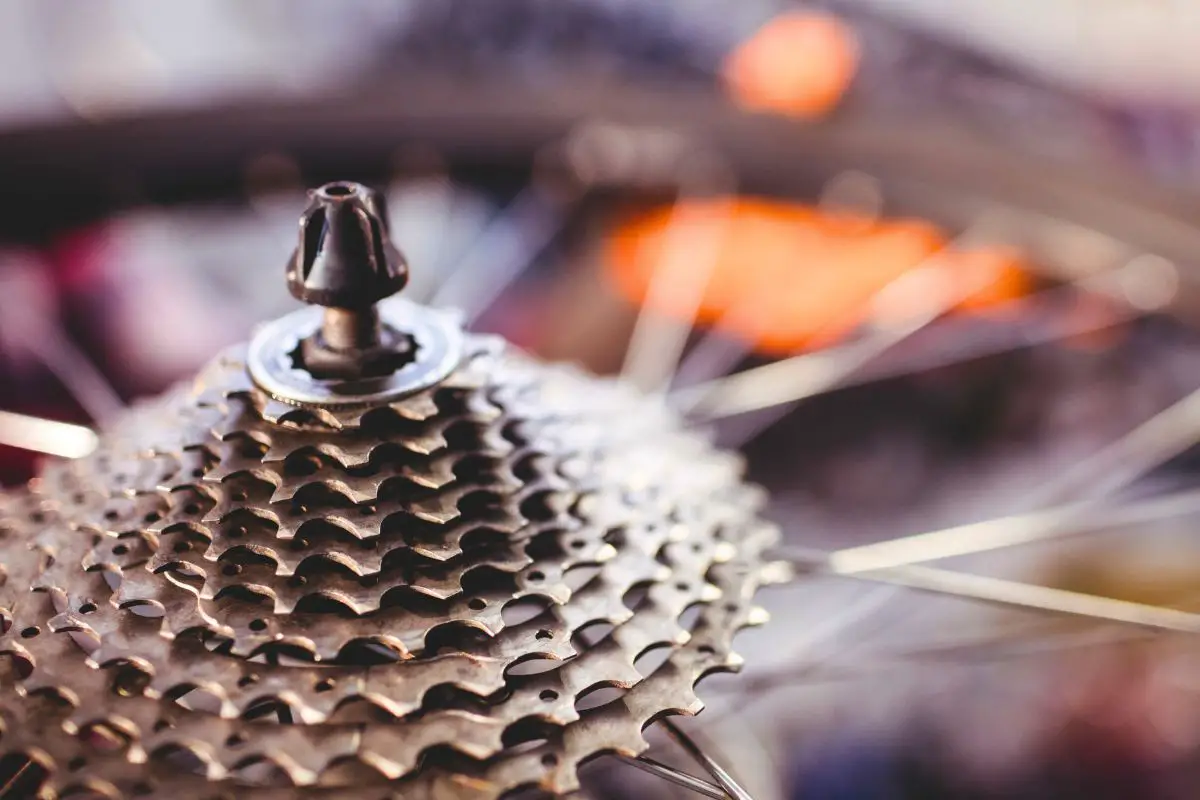
What “Conversion” Actually Means (And Doesn’t Mean)
There’s massive confusion about what converting from freewheel to cassette involves. Let’s clear up the myths before you spend money on the wrong approach.
What You CANNOT Do
Install a Cassette on a Freewheel Hub
- Freewheel hubs have threads. Cassette hubs have splines. No adapter exists to convert between them.
- The hub body itself must be replaced, which means building a new wheel or buying a complete new wheel.
- For hub motor e-bikes, this usually means buying a complete new motor/wheel assembly.
Swap Just the Freehub Body on Most E-Bike Motors
- Most budget hub motors have the freewheel threads machined directly into the motor casing.
- The freehub body isn’t a replaceable part, it’s integrated into the hub design.
- Some Bafang motors allow motor core swapping between shells, but this requires relacing the wheel with different spoke lengths due to different spacing.
What You CAN Do
Buy a New Wheel with Cassette Hub
- Replace your entire rear wheel with one that has a cassette-compatible freehub
- Cost: $150-400 for a complete wheel, more if you need a new hub motor
- Frame spacing must match (typically 135mm for MTB, 130mm for road)
- You’ll also need cassette-compatible shifters if your current ones are freewheel-specific
Have Your Wheel Rebuilt
- Take your existing rim and have a bike shop lace it to a new cassette hub
- Cost: $100-200 for labor plus $50-150 for the hub
- Only worth it if your rim is valuable or you’re attached to your current wheel
- Not possible with most hub motors as the motor IS the hub
For E-Bikes: Buy a Cassette Motor
- Order a complete new hub motor designed for cassettes
- Cost: $200-500 depending on motor power and quality
- Check dropout spacing carefully – cassette motors often have wider spacing than freewheel versions
- May require frame spreading if aluminum frame can’t accommodate the width
The Real Cost Calculator
Before committing to conversion, calculate the actual total cost versus just maintaining your freewheel system.
| Component | Keep Freewheel | Convert to Cassette |
|---|---|---|
| New wheel/motor | $0 | $200-500 |
| Cogs | $25-40 (freewheel) | $40-120 (cassette) |
| Shifters (if incompatible) | $0 | $0-80 |
| Chain | $15-25 | $15-40 |
| Total Cost | $40-65 | $255-740 |
Conversion makes sense if you need 8+ speeds, want wider gear range with an 11T smallest cog, or your freewheel is failing frequently. Otherwise, just replace the freewheel.
If You’re Buying a New Wheel: The Full Conversion Process
You’ve decided conversion is worth it and you have a new cassette-compatible wheel or motor. Here’s the complete step-by-step process to remove your freewheel and install the new cassette system.
Tools You’ll Need
For Freewheel Removal
- Freewheel removal tool (match your freewheel spline pattern)
- Large adjustable wrench or 1-inch box wrench
- Penetrating oil if freewheel is old/stuck
- Vice or secure way to hold the wheel
For Cassette Installation
- Cassette lockring tool
- Chain whip
- Torque wrench (or adjustable wrench)
- Bike grease
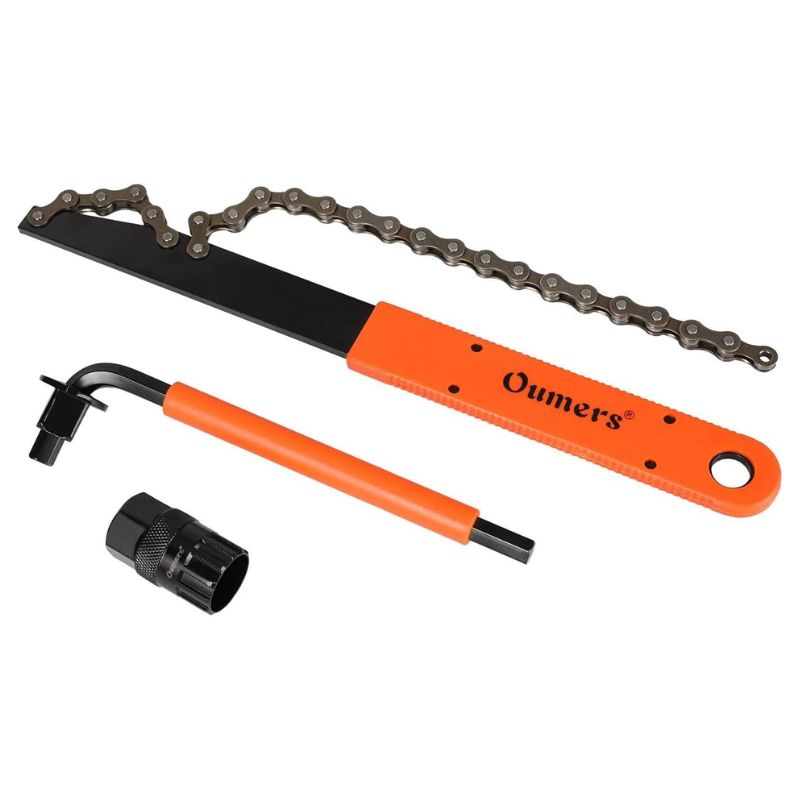
Cassette/Freewheel Removal Tools
High-quality toolkit for effortless cassette & freewheel removal, featuring chain whip and compatible lockring tool (Shimano, SRAM, SunRace, SunTour, Chris King).
Shop Aliexpress
Shop Amazon
Step 1: Removing the Old Freewheel
Freewheels tighten themselves every time you pedal, so removal requires significant force. Old freewheels that haven’t been removed in years can be extremely stubborn.
1
Remove the Rear Wheel
For hub motor e-bikes, disconnect the motor cable first. The connector is usually near the axle. Unscrew both axle nuts completely and slide the wheel out of the dropouts. Set it on a stable work surface.
2
Identify Your Freewheel Tool Pattern
Look inside the center of the freewheel. Count the splines or notches. Common patterns:
- Shimano/DNP: 4 large splines
- SunTour: 20 small splines
- Atom/Regina: 12 notches around the edge
Match your tool exactly to this pattern or you’ll strip the freewheel.
3
Insert the Removal Tool
Slide the removal tool into the freewheel splines. It should seat fully. For notch-type freewheels, thread the axle nut back on loosely to prevent the tool from popping out under force.
Common Mistake: Not seating the tool completely. If it’s partially engaged, you’ll round off the splines and ruin the freewheel.
4
Break the Initial Tightness
This is where most people struggle. The freewheel is very tight from years of pedaling force.
- Secure the wheel in a vice by clamping the axle (not the rim)
- Use a long wrench or breaker bar for maximum leverage
- Turn counterclockwise (lefty-loosey)
- You may need to stand on the wrench or hit it sharply with a hammer to break it free
If It Won’t Budge: Spray penetrating oil around the threads and let it soak overnight. Heat from a heat gun can help but risks melting plastic cogs. Some old freewheels simply cannot be removed without destruction.
5
Unscrew Completely
Once the initial bond breaks, the freewheel should unscrew smoothly. Remove the axle nut if you used it, and spin the freewheel off by hand. Check the hub threads for damage or debris before installing anything new.
Step 2: Installing Your New Cassette Wheel
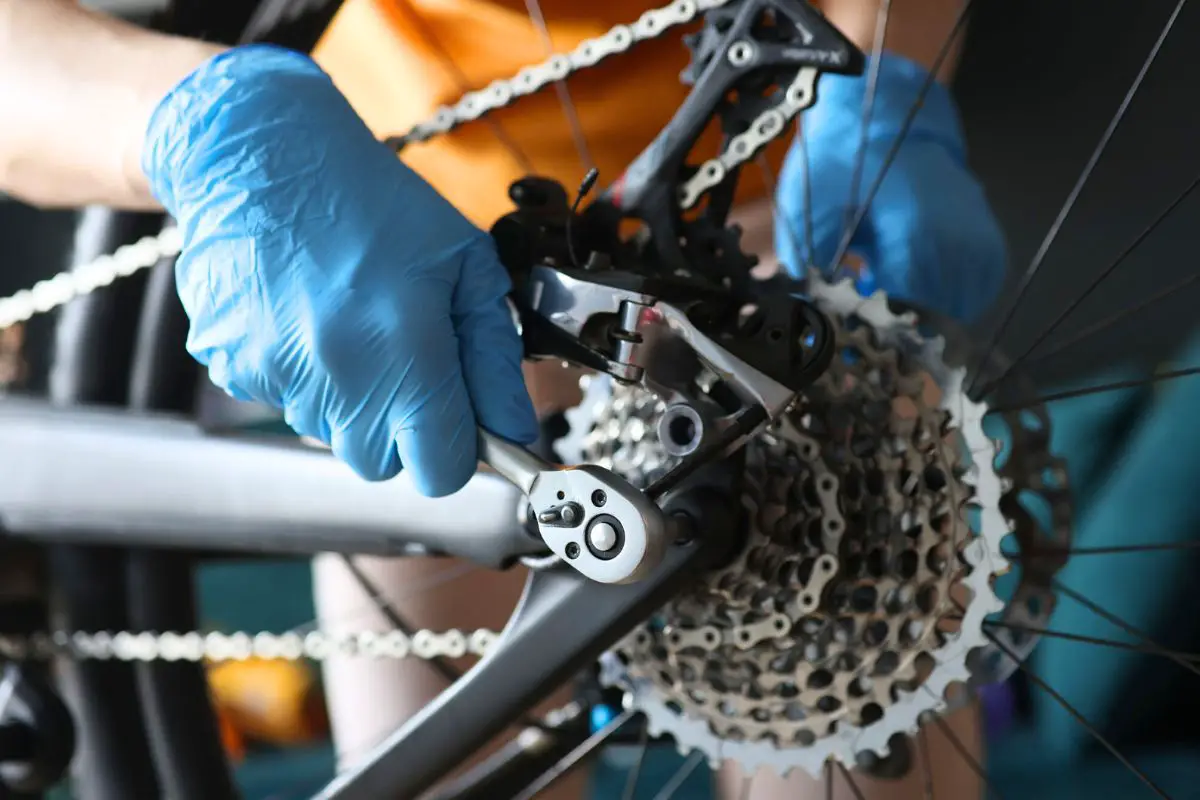
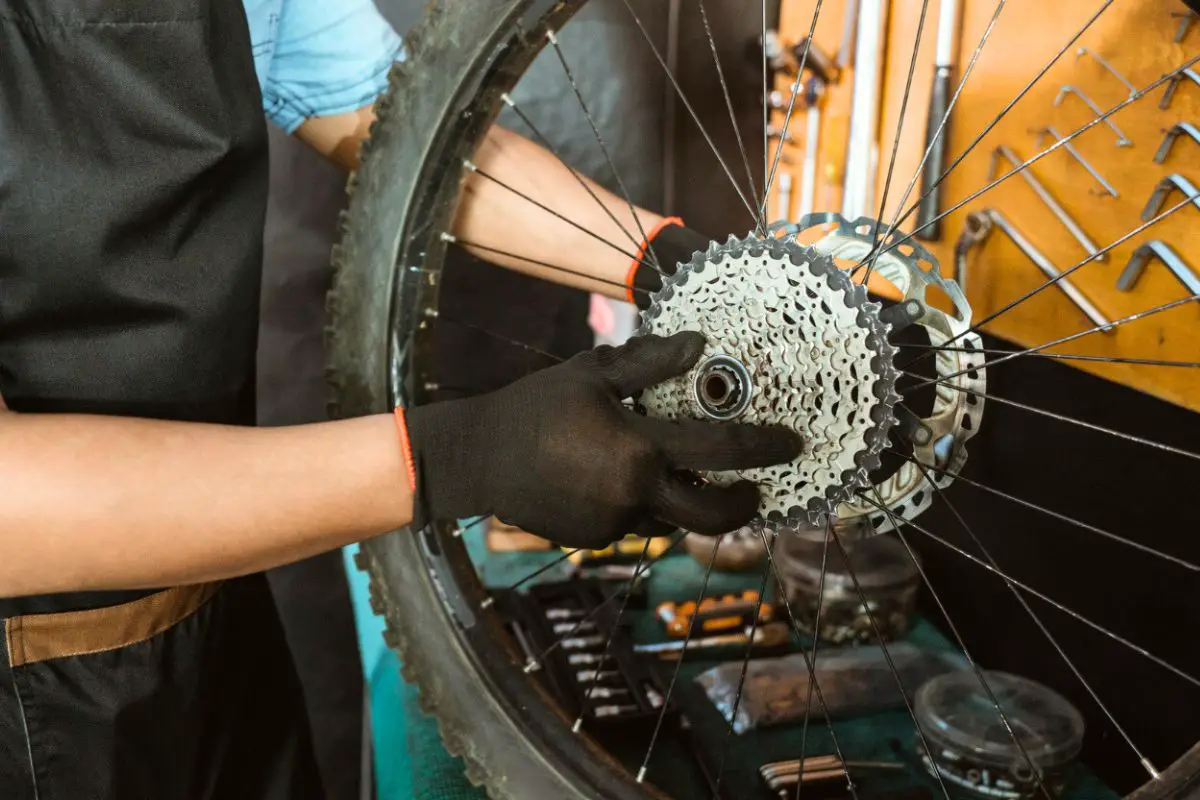
You’ve removed the old freewheel wheel and now have a new wheel with a cassette freehub. The cassette slides onto splines and locks in place with a threaded ring.
1
Clean and Grease the Freehub
Wipe the freehub splines clean with a rag. Apply a thin layer of bike grease to the splines. This prevents the cassette from seizing onto the freehub and makes future removal easier.
Don’t Skip This: Without grease, aluminum cassettes can bond to aluminum freehubs through corrosion, making removal impossible without destroying the cassette.
2
Align the Cassette
Look at the freehub splines. One spline is wider than the others. The cassette has a matching wide notch. This ensures correct alignment and prevents backward installation.
- Rotate the freehub so the wide spline faces upward
- Align the cassette’s wide notch with this spline
- The cassette will only slide on in one orientation
3
Slide On the Cassette
Most cassettes come as a pre-assembled unit. Slide it onto the freehub splines. If it doesn’t slide smoothly, check alignment. Don’t force it or you’ll damage the splines.
- Some cassettes require a spacer behind the largest cog (check your cassette documentation)
- The numbers on each cog should face outward where you can read them
- All cogs should seat firmly against the freehub body
4
Thread On the Lockring
The lockring secures the entire cassette. Thread it on by hand first to ensure it’s not cross-threaded. It should turn smoothly.
Cross-Threading Warning: If the lockring feels tight immediately, stop. Back it out and try again. Cross-threaded lockrings destroy freehub threads.
5
Tighten the Lockring
Insert your lockring tool into the lockring splines. The tool only goes in one way. Use an adjustable wrench to tighten clockwise.
- Proper torque: 40 Nm (Newton meters) or about 30 ft-lbs
- Without a torque wrench, tighten firmly but don’t hulk-smash it
- The lockring should be very tight but not stripped
Give the cassette a wiggle. It should have zero play. If it moves, the lockring isn’t tight enough.

Shimano HG51 8-Speed Cassette
Upgrade your e-MTB with the Shimano CS-HG51 8-speed cassette, ensuring effortless gear changes on any terrain.
Shop Aliexpress
Shop Amazon

Shimano CS-R7000 Sprocket Cassette
Experience smooth and precise shifting on every ride with the SHIMANO 105 R7000 11-speed cassette, designed for optimal performance.
Shop Aliexpress
Shop Amazon
Step 3: Reinstalling the Wheel and Final Adjustments
With the cassette installed, you’re ready to put everything back together. This is where spacing issues and derailleur adjustments become apparent.
Check Frame Spacing
Before installing the wheel, verify it fits your frame. Cassette wheels are sometimes wider than freewheel wheels, especially on e-bike motors.
- Measure the hub’s Over Locknut Distance (OLD) with calipers
- Measure your frame’s dropout spacing (inside to inside)
- These should match within 2-3mm for safe installation
- If the hub is 5mm+ wider, consider a different wheel or professional frame spreading (steel only)
Install the Wheel
Slide the wheel into the dropouts. For hub motors, route the motor cable before fully seating the axle.
- Ensure the axle sits fully in the dropout slots on both sides
- Hand-tighten both axle nuts evenly
- Check that the wheel is centered in the frame
- Torque the axle nuts to spec (usually 35-45 Nm for e-bike motors)
- Reconnect the motor cable and ensure it’s not pinched
Adjust Chain Length
Your new cassette likely has a different size range than your old freewheel, requiring chain length adjustment.
- Shift to the largest chainring and largest cassette cog
- The derailleur should be at maximum extension without excessive tension
- If the chain is too short, add links. Too long, remove links
- Use a chain tool to break and reconnect the chain with a new master link
New Chain Recommendation: If your chain has significant wear, replace it now. Worn chains skip on new cassettes.
Set Derailleur Limits
The derailleur limit screws prevent the chain from overshooting the cassette. These need adjustment for your new gear range.
- High limit (small cog): Shift to the smallest cog. Adjust the H screw so the derailleur pulley aligns directly under the smallest cog
- Low limit (large cog): Shift to the largest cog. Adjust the L screw so the pulley aligns under the largest cog without pushing the chain off
- Test shifting through all gears before riding
Problems You’ll Actually Encounter
Even perfect installations run into issues. Here’s what goes wrong and how to fix it without wasting hours chasing phantom problems.
| Problem | Likely Cause | Fix |
|---|---|---|
| Freewheel won’t budge | Threads seized from years of use | Penetrating oil overnight, longer wrench, heat gun, or accept destructive removal |
| Removal tool strips freewheel | Wrong tool or tool not fully seated | Stop immediately, get correct tool, may need destructive removal if already damaged |
| New wheel doesn’t fit frame | Spacing mismatch (135mm vs 175mm vs 190mm) | Return wheel, buy correct spacing, or professional frame spreading (steel frames only) |
| Cassette won’t slide on freehub | Wrong cassette type or dirty splines | Verify Shimano/SRAM compatibility, clean splines thoroughly |
| Shifting is terrible | Speed mismatch, cable tension, limit screws | Verify shifter matches cassette speeds, adjust cable tension and limits |
| Chain skips under power | Worn chain on new cassette | Replace chain, chain and cassette wear together |
| Motor error codes after installation | Speed sensor misaligned or damaged during install | Check speed sensor position and magnet alignment |
| Cassette makes clicking noises | Lockring not tight enough or cassette play | Re-torque lockring to 40 Nm, check for proper spacer installation |
E-Bike Specific Complications
Hub motor e-bikes add extra challenges that standard bike conversions don’t face. Ignoring these issues leads to failed installations and potentially dangerous situations.
Motor Width and Frame Compatibility
This is the number one reason e-bike conversions fail. Cassette hub motors measure 135mm to 190mm depending on design, while freewheel motors typically measure 135mm or 175mm.
Measure Before Buying
- Measure your current frame dropout spacing with calipers
- Contact the motor supplier for exact OLN measurements
- If measurements don’t match within 3mm, choose a different motor
- Never assume the seller’s listing is accurate, verify dimensions
Controller & Display Recalibration
Changing from 7-speed freewheel to 9-speed cassette alters gear ratios. Some motor controllers need recalibration to match the new speed range.
What Needs Adjusting
- Speed limit settings: Cassettes with 11T smallest cog increase top speed. Controller may hit speed limiter sooner
- PAS levels: Power assist levels may feel different with new gear ratios
- Wheel circumference: If changing wheel size during conversion, update this in controller settings
Torque Considerations
E-bike motors produce 40-80 Nm of torque, far more than human pedaling. This stresses the cassette, freehub, and lockring more than on standard bikes.
Common Failure Points
- Cassette lockring: Under-torqued lockrings loosen under motor power, ruining threads
- Freehub pawls: Budget freehubs fail quickly under e-bike torque
- Aluminum cassettes: Wear faster than steel under continuous motor assist
When Conversion Doesn’t Make Sense
Not every freewheel bike should be converted to cassette. Sometimes the smart move is keeping what you have or selling the bike and buying one already set up correctly.
Skip Conversion If:
- Your freewheel works fine and you’re happy with 7 speeds: Don’t fix what isn’t broken
- Total conversion cost exceeds 40% of bike value: You’re better off selling and upgrading
- You have an aluminum frame and need 10mm+ spacing increase: Risk of frame failure is too high
- You ride casually and don’t need 8+ speeds: Freewheels are simpler and cheaper to maintain
- You can’t source compatible parts: Some older e-bikes use proprietary systems with no cassette option
Conversion Makes Sense If:
- You need 8+ speeds for varied terrain: Cassettes offer wider range and smaller jumps between gears
- Your freewheel is failing repeatedly: Some freewheels have chronic reliability issues
- You’re already replacing the wheel for other reasons: Might as well upgrade while you’re at it
- You want an 11T smallest cog for higher top speed: Freewheels max out at 14T
- You plan to keep the bike long-term: Cassette parts have better availability and quality
The real question isn’t “Can I convert?” but “Should I convert?” Calculate total costs, check compatibility thoroughly, and be honest about whether you’ll actually use the benefits of a cassette system.


