
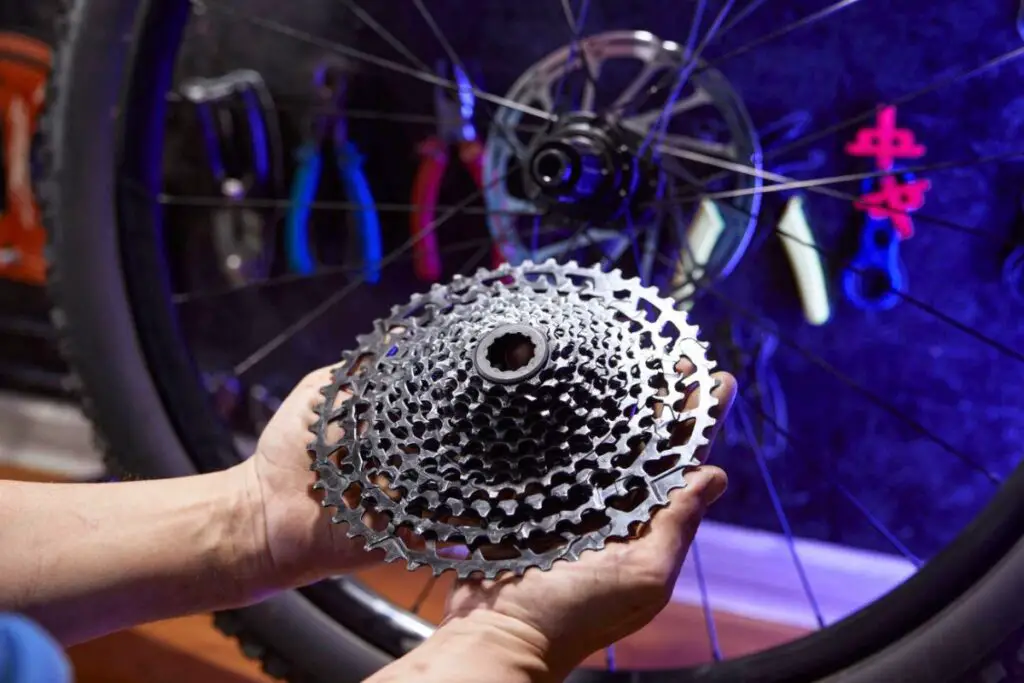
Converting from cassette to freewheel is a downgrade in almost every measurable way, but sometimes circumstances force your hand. Maybe your freehub body seized and replacement costs $150, or you found a cheap hub motor that only comes in freewheel format, or you’re simplifying a bike for someone who doesn’t need 11 speeds. Whatever the reason, this conversion means accepting limitations with maximum 7 speeds, smallest cog limited to 14T, and potential frame spacing issues. Before ordering freewheel parts, calculate whether buying a complete freewheel wheel makes more sense than trying to retrofit your cassette hub.
Why Anyone Downgrades to Freewheel (The Honest Version)
This isn’t a conversion people do for performance gains. It’s almost always driven by budget constraints, availability issues, or specific compatibility requirements. Let’s be clear about when this makes sense and when you’re just throwing money at a bad solution.
Legitimate Reasons This Might Be Your Best Option
Bad Reasons That Will Cost You More Later
First: Verify What You Actually Have
Before ordering any freewheel parts, confirm you have a cassette system. The tests are simple but critical.

The Spin Test (30 Seconds)
Cassette System
Remove the rear wheel and spin the cogs backward. The center lockring rotates with the cogs. You’ll see a flush lockring with external splines, often stamped with “LOCK” and an arrow.
Freewheel System
Spin the cogs backward. The center fitting stays completely still. You’ll see recessed splines or notches deep inside the body where a removal tool inserts.
If You Already Have a Freewheel: You don’t need this guide. You’re just replacing one freewheel with another. Unscrew the old one, grease the hub threads, and screw on the new one. Done.
Speed Count Check
Count your cogs. Cassettes typically have 8-12 speeds. Freewheels max out at 7 speeds (technically 8-9 exist but they’re garbage).
The Conversion Reality Check
Converting a cassette hub to accept a freewheel is impossible. The hub body itself determines which system you can use. This isn’t like swapping brake pads where you just replace one part with another.
What Actually Needs Changing
You Cannot Convert the Hub
- Cassette hubs have splines. Freewheel hubs have threads. No adapter converts between them.
- The hub body is machined differently at the factory. You can’t add threads to a splined freehub.
- Anyone selling a “conversion adapter” is lying or selling something for single-speed conversions only.
Your Three Actual Options
- Buy a complete new wheel with a threaded freewheel hub ($80-150 for basic wheel)
- Buy a new hub motor with freewheel threading if this is for an e-bike ($200-400)
- Rebuild your existing wheel by replacing just the hub and relacing spokes ($100-200 labor + $40-80 hub)
Cost Comparison: Is This Even Worth It?
| Approach | What You’re Buying | Typical Cost | Realistic? |
|---|---|---|---|
| Keep cassette | Replace worn cassette | $40-120 | Best option if cassette works |
| Buy freewheel wheel | Complete wheel + freewheel | $100-180 | Makes sense if freehub seized |
| Hub rebuild | New hub + labor to relace | $150-280 | Only if rim is valuable |
| E-bike motor swap | New freewheel hub motor | $250-450 | Check used cassette motors first |
Step 1: Removing Your Cassette
If you’re buying a new wheel, you can skip this section and go straight to freewheel installation. But if you’re rebuilding your existing wheel with a freewheel hub, you need to remove the cassette first to access the hub.
Tools Required
- Cassette lockring tool (matches your cassette brand – Shimano, SRAM, or Campagnolo)
- Chain whip (holds cassette while you loosen lockring)
- Adjustable wrench or 1-inch wrench for lockring tool
- Bike stand or way to secure wheel
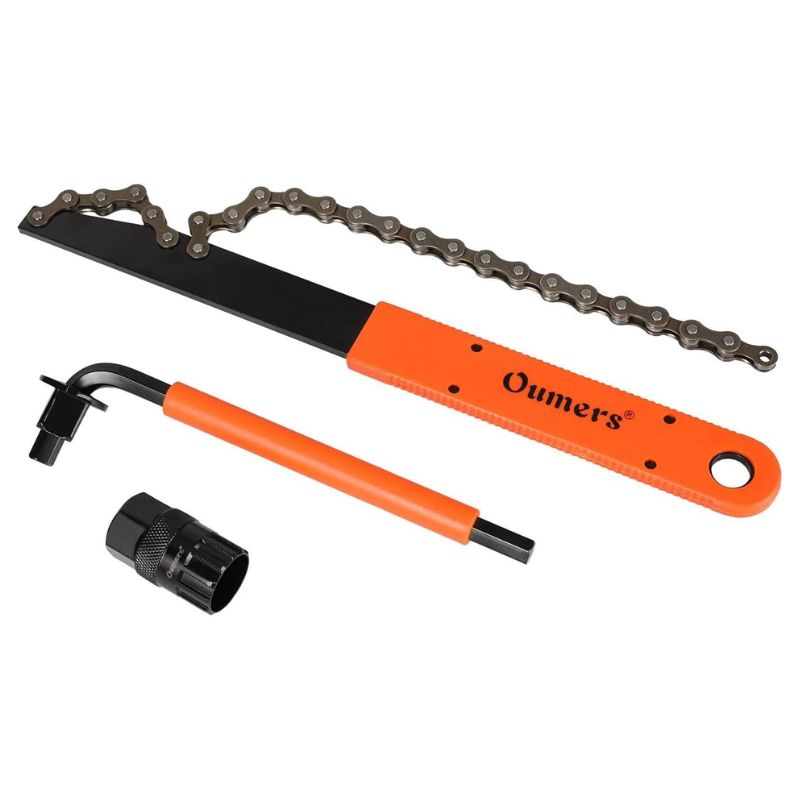
Cassette/Freewheel Removal Tools
High-quality toolkit for effortless cassette & freewheel removal, featuring chain whip and compatible lockring tool (Shimano, SRAM, SunRace, SunTour, Chris King).
Shop Aliexpress
Shop Amazon
Removal Process
1
Remove the Rear Wheel
- For e-bikes, disconnect motor cable first
- Shift to smallest cog to reduce chain tension
- Loosen axle nuts or quick-release skewer
- Slide wheel out of dropouts
2
Secure the Cassette
Wrap the chain whip around one of the larger cogs (more teeth = more chain engagement = better grip). The chain whip prevents the cassette from spinning while you loosen the lockring.
3
Remove the Lockring
- Insert lockring tool into the center splines
- Turn counterclockwise with wrench while holding chain whip steady
- Initial break requires significant force – this is normal
- Once loose, spin lockring off by hand
4
Slide Off the Cassette
The cassette should slide straight off the freehub splines. Some cassettes come off as one unit, others as separate cogs with spacers. Take a photo if they separate so you remember the order (though you won’t be reinstalling them).
Step 2: Installing the Freewheel on Your New Hub
Whether you bought a complete wheel or rebuilt your existing wheel with a threaded hub, you now need to thread the freewheel onto the hub. This process is simpler than cassette installation but has its own critical steps.
Pre-Installation Checks
Verify Thread Pitch:
Most freewheels use 1.37″ x 24 TPI (threads per inch) but French and Italian standards exist. Verify your hub’s thread pitch matches your freewheel. Starting to thread mismatched parts will cross-thread and destroy both hub and freewheel.
Check Speed Compatibility:
Your freewheel speed count must match your shifters. 7-speed shifters work with 7-speed freewheels only. If you’re converting from 8+ speed cassette to freewheel, budget for new shifters ($30-60) and possibly a new derailleur.
Installation Steps
1
Grease the Hub Threads
Apply a generous layer of grease or anti-seize compound to the hub’s threads. This prevents seizing and makes future removal possible. Every pedal stroke tightens the freewheel onto the hub, so without grease, you’ll never get it off again.
Don’t Skip This: Stuck freewheels are the #1 problem with this system. Some old freewheels require destructive removal because nobody greased the threads 10 years ago.
2
Thread Freewheel by Hand
- Hold freewheel aligned with hub threads
- Turn clockwise (righty-tighty) by hand
- It should thread smoothly with no resistance
- If you feel resistance, STOP – you’re cross-threading
The freewheel should spin freely for several rotations before starting to tighten. If it binds immediately, back it off and try again with better alignment.
3
Tighten (But Don’t Overtighten)
Thread the freewheel as tight as you can by hand. Then:
- Option 1: Use a chain whip on the largest cog to give it 1-2 more full turns
- Option 2: Install the wheel loosely, engage brake, and pedal forward to tighten
Don’t Gorilla It: Freewheels self-tighten as you pedal. Overtightening now makes removal impossible later. Hand-tight plus 1-2 turns with a tool is sufficient.
4
Check Alignment
Look at the freewheel from the side. The hub axle should be perfectly centered within the freewheel body. If the axle appears off-center or angled, the freewheel is cross-threaded. Remove it immediately, clean the threads, and start over.

Shimano Freewheel TOURNEY TZ MF-TZ500-7
7-speed freewheel featuring Hyperglide for smooth shifting and wide-range gearing (14-34T) for optimal performance.
Shop Aliexpress
Shop Amazon

Shimano Freewheel TOURNEY TZ MF-TZ30-6
Shimano 6-speed freewheel, featuring Hyperglide technology and a MegaRange 34T gear for effortless pedaling on any terrain.
Shop Aliexpress
Shop Amazon
Step 3: Reinstalling the Wheel and Final Setup
With the freewheel installed, you need to get the wheel back on the bike and adjust your drivetrain to work with the new gear range.

Wheel Installation
- Slide wheel into dropouts
- Ensure axle seats fully in both dropout slots
- For hub motors, route cable before tightening axle
- Tighten axle nuts or quick-release
- Check wheel centering in frame – should be equal distance from both chainstays
Chain Length Adjustment
Why This Matters:
Your freewheel likely has a different gear range than your old cassette. A 7-speed freewheel typically runs 14-34T or 14-28T, while cassettes can go 11-42T or wider. This changes how much chain length you need.
- Shift to largest chainring and largest freewheel cog
- Derailleur should be at maximum extension without pulling tight
- If chain is too short, add links (buy a new chain if needed)
- If chain is too long, remove links with a chain tool
- Always reconnect chain with a new master link
Chain Wear Check: If your chain has significant wear (stretched), replace it now. Worn chains skip on new freewheel cogs and accelerate wear.
Derailleur Adjustment
Your rear derailleur needs recalibration for the freewheel’s gear positions.
High Limit (Smallest Cog)
- Shift to smallest freewheel cog
- Adjust H screw until derailleur pulley aligns perfectly under the smallest cog
- Too far inboard = chain drops off into spokes
- Too far outboard = poor shifting from small cog
Low Limit (Largest Cog)
- Shift to largest freewheel cog
- Adjust L screw until derailleur pulley aligns under the largest cog
- Too far inboard = chain drops into wheel
- Too far outboard = won’t shift to largest cog
Index Adjustment:
After limits are set, fine-tune cable tension using the barrel adjuster on the shifter or derailleur. Shift through all gears. If shifting is slow going up (to larger cogs), add tension by turning adjuster counterclockwise. If slow going down, reduce tension clockwise.
Problems You’ll Actually Face
Freewheel conversions have their own unique failure modes beyond typical cassette issues. Here’s what goes wrong and how to fix it without making things worse.

| Problem | Cause | Solution |
|---|---|---|
| Freewheel won’t thread on | Wrong thread pitch or cross-threading | Verify thread compatibility, clean threads, try again with careful alignment |
| Freewheel wobbles/off-center | Cross-threaded during installation | Remove immediately, inspect threads for damage, reinstall correctly |
| Can’t shift to all gears | Shifter speeds don’t match freewheel | Buy matching speed shifters, can’t mix 8-speed shifter with 7-speed freewheel |
| Chain skips under power | Worn chain or freewheel defect | Replace chain first, if problem persists replace freewheel |
| Wheel spacing too narrow for frame | 126mm or 130mm hub in 135mm frame | Add spacers to axle, or live with it (usually works fine) |
| Freewheel makes clicking noise | Normal ratcheting OR internal wear | Some clicking is normal, excessive = replace freewheel |
| E-bike motor error after install | Speed sensor misalignment | Check magnet position on freewheel, sensor may need repositioning |
E-Bike Specific Headaches
Hub motor e-bikes add complications beyond standard bike conversions. Motor torque stresses freewheels more than human power, and some motors don’t play nice with threaded hubs.
Thread Stripping Risk
Prevention
- Use quality Shimano freewheels, not cheap generics
- Apply anti-seize but don’t over-grease (too much = slippage)
- Check freewheel tightness every 100 miles for first 500 miles
- Avoid high motor assist in lowest gear (maximum stress on threads)
Speed Sensor Compatibility
E-bike speed sensors mount differently on freewheels versus cassettes. The sensor magnet position changes, which can trigger errors.
What to Check
- Verify sensor magnet is positioned within 2mm of sensor
- Freewheel body may be thicker than cassette, requiring sensor repositioning
- Test error codes after installation (Error 21 on Bafang = sensor issue)
- Some motors require recalibration when changing from cassette to freewheel
Freewheel Durability Under Motor Power
The Honest Assessment
Converting from cassette to freewheel makes sense in maybe 10% of cases where people consider it. The rest of the time, it’s spending $100-400 to get an objectively worse system because of bad information or sunk cost fallacy.
Do This Instead:
- If your cassette works fine: Just replace worn cogs, don’t convert
- If your freehub is seized: Calculate cost of buying a complete cassette wheel versus freewheel wheel. Often similar prices.
- If buying an e-bike motor: Look harder for cassette versions. They’re available for almost every motor model and worth the search effort
- If you need simplicity: Consider internal hub gears (3-8 speed) instead of downgrading to freewheel
- If parts availability is the issue: Order cassettes online. International shipping from reputable sellers is usually cheaper than local conversion costs
Proceed With Conversion Only If:
- You’ve calculated total costs (wheel/hub + freewheel + possibly shifters + chain) and it’s genuinely cheaper than alternatives
- You understand you’re accepting fewer speeds, narrower gear range, and 14T minimum cog
- You’re comfortable with more frequent freewheel replacement (every 1000-3000 miles under e-bike power)
- Your frame spacing is compatible with freewheel hub widths
- You have the tools and knowledge to properly grease threads and avoid cross-threading
Most riders looking at cassette-to-freewheel conversion would be better served fixing their actual problem (worn cassette, broken freehub, incompatible motor) rather than accepting the compromises freewheels require.


