
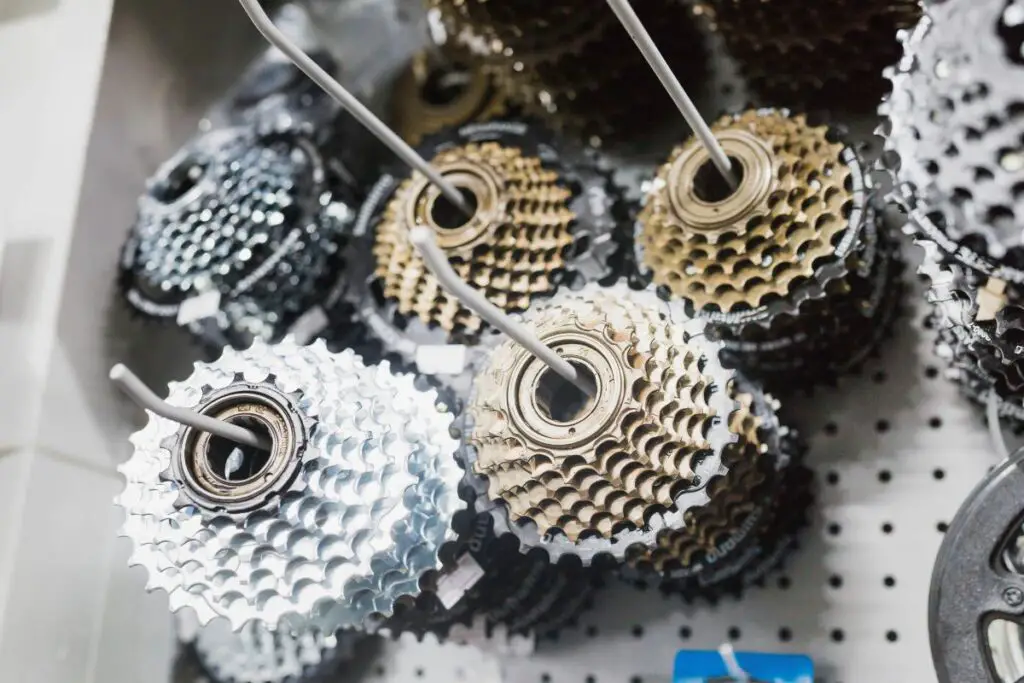
Buying the wrong replacement parts for your e-bike conversion costs you both money and time. Cassettes and freewheels look nearly identical when mounted on your bike, but they’re mechanically incompatible systems that require different tools, different hub types, and completely different approaches to removal. Order a cassette when you need a freewheel and you’ve wasted $50-80 plus shipping. Even worse, installing the wrong motor hub for your existing drivetrain means rebuilding your entire rear end or living with sketchy shifting that never quite works right. Here’s how to identify which system you have in under two minutes, plus what conversion kit buyers actually need to know before placing an order.
Why This Actually Matters for E-Bike Conversions
Most conversion kit guides skip the hard truth: matching your hub motor to your existing drivetrain isn’t optional. Bafang, Yose Power, and other popular hub motor manufacturers produce separate freewheel and cassette versions of the same motor, and they’re not interchangeable without major modifications or frame spreading that can crack aluminum frames.
The spacing difference alone creates problems. Freewheel hub motors typically measure 135mm or 175mm between dropouts (the frame’s rear fork ends), while cassette motors often run 135mm to 190mm depending on the speed count. Try forcing a 190mm cassette motor into a 175mm freewheel frame and you’re either bending steel or snapping aluminum. The motor physically won’t fit, or worse, it’ll fit but destroy your frame geometry and make the bike unsafe to ride.
Conversion Kit Reality Hub motor manufacturers typically offer both freewheel and cassette versions at the same wattage and price. The difference isn’t power output but compatibility with your existing gears. Choose wrong and you’ll need new shifters, derailleurs, possibly a new chain, and definitely new cogs.
The Speed Count Problem
Freewheel systems max out at 7 speeds in the traditional threaded design, though some manufacturers now offer janky 8-9 speed freewheels that shift poorly. Cassette systems easily handle 8-12 speeds with proper spacing and reliable shifting.
| System Type | Typical Speeds | Motor Compatibility | Smallest Cog |
|---|---|---|---|
| Freewheel | 5-7 speed (8-9 exist) | 135mm or 175mm spacing | 14T minimum |
| Cassette | 8-12 speed | 135mm-190mm spacing | 11T minimum (some 10T) |
The Spin Test: 30 Seconds to Identify Your System
This test works whether your bike is powered or not, and requires zero tools. You’re checking how the ratcheting mechanism behaves when you spin the cogs backward.
Step 1: Remove the Rear Wheel
Quick Release Systems
- Open the quick-release lever on the non-drive side
- Unscrew the adjusting nut a few turns (don’t remove completely)
- Pull the skewer out and lift the wheel free
Bolt-On Axles (Common on Conversion Kits)
- Use 15mm, 17mm, or 18mm wrench depending on your motor
- Disconnect motor cable if it’s a hub motor (usually a large connector near the axle)
- Loosen both axle nuts completely
- Slide or wiggle the wheel out of the dropouts
Step 2: Spin and Watch the Tool Fitting
Hold the wheel with the cogs facing you. Rotate the largest cog backward (counterclockwise) and watch the center fitting where a removal tool would insert.
Visual Clues: Reading Your Rear Hub Without Removing Anything
Before you pull the wheel, these visual indicators often reveal which system you have. Not 100% reliable because bike manufacturers mix and match parts, but accurate enough to guide your conversion kit purchase.

Gear Count Method
8+ Speeds = Almost Certainly Cassette
- Traditional freewheels top out at 7 speeds
- Some 8-9 speed freewheels exist but they’re rare and shift poorly
- 10+ speeds physically require cassette spacing
7 Speeds = Could Be Either
- Older bikes (pre-1990) likely use 7-speed freewheels
- Newer bikes (post-1990) probably use 7-speed cassettes
- Conversion kits often come with 7-speed freewheels for cost reasons
6 Speeds or Fewer = Likely Freewheel
- Single-speed conversions always use freewheels
- Budget bikes and older models default to freewheel systems
- Easier and cheaper to service for casual riders
Center Fitting Appearance
| Visual Feature | Cassette | Freewheel |
|---|---|---|
| Tool fitting position | Flush with outer cog face | Recessed deep inside |
| Spline/notch type | 12 external splines on lockring | 12 or 20 internal splines, or notches |
| Visible markings | Often shows “LOCK” with arrow | Brand name stamped inside recess |
| Hub body bulge | Right side often has bulge for freehub | Smooth hub profile, no bulge |
Hub Motor Identification: Extra Considerations
Motor with Threaded Hub
Common On: Budget conversion kits, most Bafang freewheel motors, Yose Power basic models
Limitation: The motor cable exits near the axle, making wheel removal slightly more complicated. Disconnect before pulling the wheel or risk damaging the controller.
Motor with Splined Freehub
Common On: Premium conversion kits, Bafang cassette motors, mid-drive compatible rear wheels
Advantage: You can swap cassettes without touching the motor internals, making gear changes easier. The freehub body is replaceable if it wears out.
Tool Selection: Get It Right the First Time
Buying the wrong tool wastes money and potentially damages your cogs or hub. Removal tools are not universal, and using the wrong one will strip splines or round off notches, making removal nearly impossible without destroying the freewheel or cassette.
Cassette Removal Tools
Standard Shimano/SRAM Pattern:
- Park Tool FR-5.2 or equivalent lockring tool
- Chain whip to hold cassette while removing lockring
- Adjustable wrench or 1-inch box wrench for lockring tool
- Works on 95% of cassette systems including most e-bike motors
Campagnolo Exception:
- Requires specific Campagnolo lockring tool (different spline pattern)
- Rare on conversion kits, mostly found on high-end road bikes
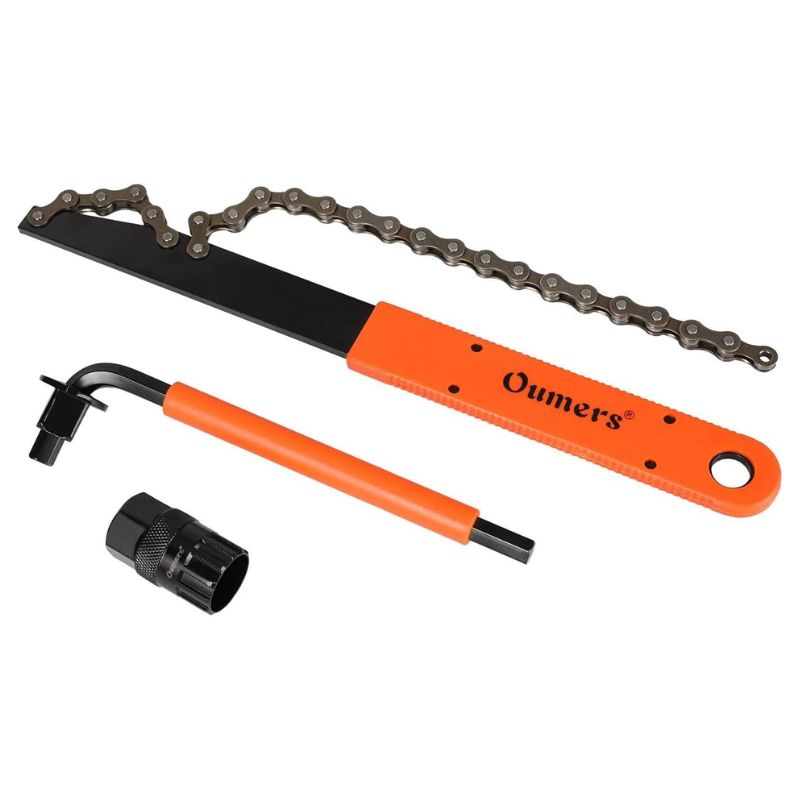
Cassette/Freewheel Removal Tools
High-quality toolkit for effortless cassette & freewheel removal, featuring chain whip and compatible lockring tool (Shimano, SRAM, SunRace, SunTour, Chris King).
Shop Aliexpress
Shop Amazon
Freewheel Removal Tools
Freewheels use different tool patterns depending on manufacturer. Count the splines or notches visible in the center recess to match the correct tool.
| Freewheel Type | Tool Required | Common Brands |
|---|---|---|
| Shimano 4-spline | Park Tool FR-1.3 | Shimano, DNP, some conversion kit motors |
| 20-spline | Park Tool FR-3 | SunTour, older models |
| 12-notch | Park Tool FR-5 | Atom, Regina, some cheap freewheels |
| 2-pin notch | Park Tool FR-7 (Falcon pattern) | Falcon, some single-speed conversions |
Warning: Some cheap freewheels have shallow notches that don’t provide enough purchase for any tool. These often require destructive removal, meaning you’ll ruin the freewheel getting it off. Budget single-speed conversions are notorious for this problem.
Conversion Kit Compatibility: What Actually Fits Your Frame
Your frame’s dropout spacing (the distance between the rear fork ends) determines which motor hubs will fit. Force the wrong spacing and you’ll bend dropouts, crack welds, or create dangerous wheel alignment issues.
Measuring Your Frame Spacing (OLN)
OLN means Over Lock Nut distance, measured from the inside face of one dropout to the inside face of the other.
Measurement Method
- Remove the rear wheel completely
- Use a ruler or caliper to measure the inside distance between dropouts
- Common measurements: 120mm (old road), 126mm (vintage road/hybrid), 130mm (modern road), 135mm (MTB standard), 142mm (thru-axle), 148mm (Boost), 175mm (fat bike)
| Dropout Spacing | Typical Bike Type | Motor Options | Frame Flexibility |
|---|---|---|---|
| 126-130mm | Road bikes (vintage to modern) | Limited, mostly small front hub motors | Steel: can cold-set to 135mm. Aluminum: risky |
| 135mm | MTB, hybrid, most bikes | Freewheel or cassette motors available | Standard, best compatibility |
| 142mm | Modern MTB (thru-axle) | Requires thru-axle compatible motor | Cannot use standard QR motors |
| 175-190mm | Fat bikes, some e-bikes | Fat bike specific motors only | Wide spacing, limited motor choices |
Motor Width vs. Cog Type
Here’s where things get confusing: the same motor model can come in different widths depending on whether it uses a freewheel or cassette. Bafang and other manufacturers don’t always make this clear in their listings.
Converting Between Systems: When It’s Possible vs. When It’s Not
Some riders ask if they can convert their freewheel hub motor to cassette or vice versa. The short answer: it’s complicated, expensive, and usually not worth it unless you’re doing a full wheel rebuild.

What Actually Works
Replacing Components on the Same Hub Type:
- Swapping one freewheel for another (different gear range) works fine if thread pitch matches
- Swapping one cassette for another (different gear range) works as long as speeds match your shifter
- Total cost: $30-80 for new freewheel or cassette, maybe new chain
Converting Hub Type:
- Cannot install a freehub body on a hub designed for threaded freewheels
- Hub internals are completely different; no adapter exists
- Requires new hub, new wheel build, possibly new motor if using hub motor
- Total cost: $200-500+ for complete wheel, potentially more for motor
Hub Motor Specific Challenges

Shimano Freewheel TOURNEY TZ MF-TZ500-7
7-speed freewheel featuring Hyperglide for smooth shifting and wide-range gearing (14-34T) for optimal performance.
Shop Aliexpress
Shop Amazon

Shimano Freewheel TOURNEY TZ MF-TZ30-6
Shimano 6-speed freewheel, featuring Hyperglide technology and a MegaRange 34T gear for effortless pedaling on any terrain.
Shop Aliexpress
Shop Amazon

Shimano HG51 8-Speed Cassette
Upgrade your e-MTB with the Shimano CS-HG51 8-speed cassette, ensuring effortless gear changes on any terrain.
Shop Aliexpress
Shop Amazon

Shimano CS-R7000 Sprocket Cassette
Experience smooth and precise shifting on every ride with the SHIMANO 105 R7000 11-speed cassette, designed for optimal performance.
Shop Aliexpress
Shop Amazon
Shifter & Derailleur Compatibility
Your shifter, derailleur, and cog system form a matched set based on cable pull ratios. Mix incompatible parts and you’ll get poor shifting, skipped gears, or no shifting at all.
Speed Count Matching
| Speed Change | What Needs Replacing | Estimated Cost |
|---|---|---|
| Same speeds, different range | Just the freewheel or cassette, maybe chain | $30-80 |
| 7-speed to 8-speed | Shifter, derailleur, cassette/freewheel, chain | $100-200 |
| Freewheel to cassette (different speeds) | New wheel/motor, shifter, derailleur, chain | $200-500+ |
Skip the $200 Return Shipping Mistake
The spin test takes 30 seconds and saves you from ordering incompatible parts. Check whether your tool fitting rotates with the cogs (cassette) or stays stationary (freewheel), then match your conversion kit motor to that system.
If you have 7 speeds or fewer and a tight budget, freewheel motors work fine and cost less. If you have 8+ speeds or plan to upgrade gears later, spend the extra money for a cassette motor. Mixing systems requires new wheels, new cogs, potentially new shifters and derailleurs. The costs add up fast.
Identifying your gear system correctly the first time eliminates wasted money, frustration, and incompatible parts. Two minutes with the spin test beats weeks of returns and wrong orders.


