
Planning that epic cross-country e-bike adventure from California to Nova Scotia, or down under to Australia? Think again before you pack. What’s perfectly legal in Colorado might get you fined in Quebec, and that 750W beast that’s street-legal in California becomes an unregistered motor vehicle the moment you cross into Canada. With 2025 bringing major regulatory shakeups, here’s what you actually need to know to avoid expensive surprises.
The 2025 Regulatory Revolution: Major Changes You Can’t Ignore
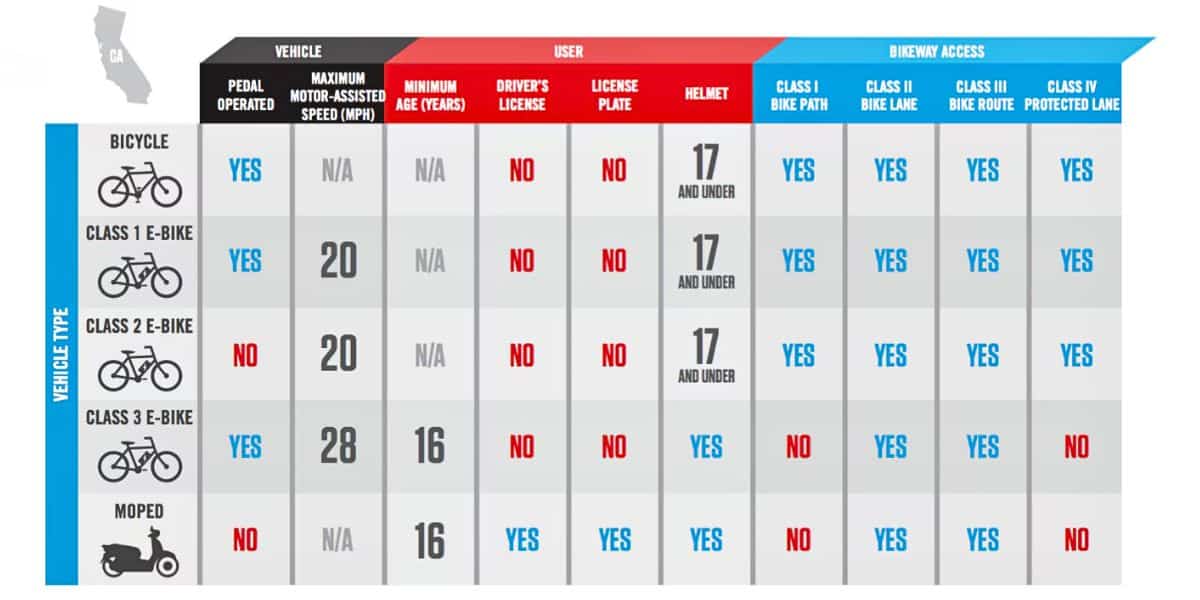
This year marks the biggest shift in North American e-bike regulations since the three-class system was introduced. California led the charge with Senate Bill 1271, eliminating the “continuous power” loophole and banning throttles on Class 3 e-bikes. The ripple effects are spreading nationwide, with Oregon following suit and several other states considering similar measures.
Critical Changes Taking Effect Now: California’s new 750W absolute limit means many previously legal e-bikes are now non-compliant. New York introduced mandatory license plates for all e-bikes, while Washington launched a $1,200 rebate program. In Canada, British Columbia created the first two-tier system with 250W “light e-bikes” for 14-year-olds.
Meanwhile, Australia maintains stricter standards with most states capping power at 200-250W, making many North American e-bikes illegal down under. The enforcement landscape is tightening everywhere, with tourist areas seeing increased spot checks and fines reaching $2,000 in some jurisdictions.
The Insurance Reality Check: Three states are actively considering mandatory registration for e-bikes, which would void current insurance policies and create a bureaucratic nightmare for casual riders. This isn’t hypothetical anymore; it’s happening.
United States: The Three-Class System Under Pressure
The US three-class system, adopted by 36 states, was supposed to create uniformity. Instead, it’s become a framework for endless variations, with each state adding its own twists that can trap unwary riders. The 2025 changes are making this worse, not better.
State-Specific Nightmares for 2025
| State | Major 2025 Change | Impact on Riders |
|---|---|---|
| California | Eliminated “continuous power” loophole, banned Class 3 throttles | Many previously legal e-bikes now require motor vehicle registration |
| New York | Mandatory license plates for all e-bikes | Registration costs and bureaucratic hassles for delivery workers |
| Washington | WE-Bike rebate program offering up to $1,200 | Increased adoption but income requirements create barriers |
| Florida | E-bikes exceeding 30 mph now classified as motor vehicles | Stricter than federal standards, catches many modified bikes |
| Oregon | Followed California’s throttle ban for Class 3 e-bikes | Shows trend toward stricter throttle restrictions nationwide |
The Registration Threat: Three States Leading the Charge
The League of American Bicyclists warns that at least three states are considering mandatory registration for all e-bikes, not just non-compliant ones. This would fundamentally change e-bike ownership, adding costs and bureaucracy that could kill the accessibility that makes e-bikes appealing.
What Registration Could Mean: Annual fees of $50-150, mandatory insurance requirements, liability concerns that void homeowner’s coverage, and potential licensing requirements for riders. The industry is lobbying hard against this, but political momentum is building in several states.
Canada: Provincial Power Plays and the 500W Ceiling
Canada maintains a federal 500W/32 km/h standard that sounds simpler than the US system but creates its own problems. Cross the border with your legal US 750W e-bike, and you’re suddenly riding an unregistered motor vehicle. Each province then adds its own age limits, helmet requirements, and path restrictions.
The PEI Problem: When E-bikes Become Motorcycles
Prince Edward Island stands alone in treating e-bikes as limited-speed motorcycles, requiring full registration, licensing, and insurance. This creates a bureaucratic nightmare for tourists and demonstrates how far provincial interpretations can diverge from federal intent.
The 2021 regulatory changes that were supposed to modernize PEI’s system actually made things more complex, requiring special safety features like motors that won’t engage until the bike reaches 3 km/h. It’s a preview of what happens when provinces overthink e-bike regulation.
Border Crossing Reality Check
That 750W e-bike that’s perfectly legal in Washington State becomes a motor vehicle the moment you cross into British Columbia. There’s no grace period, no tourist exception, and no “I didn’t know” defense. Canadian border officials are increasingly aware of US e-bike specifications and will check.
Common Border Issues: US bikes with 750W motors, throttle-only operation above 6 km/h, and speedometer requirements that differ between countries. Some rental companies now refuse to rent to cross-border travelers due to liability concerns.
Australia: The Strict Southern Approach
Australia takes a conservative approach to e-bike regulation, with most states capping power at 200-250W and maintaining the 25 km/h speed limit religiously. This makes many North American e-bikes illegal down under, and enforcement is getting stricter as the country grapples with safety concerns.
The Road vs Off-Road Mode Trap
Many Australian e-bikes come with “Road” and “Off-Road” modes, allowing higher power on private property. The problem? Riders are responsible for ensuring their bike is in road-legal mode on public paths, and police are increasingly conducting spot checks with power meters.
Getting caught in off-road mode on public paths can result in fines up to $2,000 and having your e-bike impounded as an unregistered motor vehicle. The “I forgot to switch modes” defense doesn’t work.
Battery Safety Crackdown
Following several lithium battery fires, Australian states are implementing strict battery safety regulations. New South Wales leads with requirements for manufacturer-supplied chargers only, well-ventilated charging areas, and prohibitions on overnight charging.
Safety Requirements Spreading: No charging on carpet or beds, mandatory ventilation during charging, prohibition on using damaged batteries, and increasing requirements for UL-certified batteries. Insurance companies are starting to require proof of compliance.
The Hidden Costs: What Travel Guides Don’t Tell You
Planning cross-border e-bike travel isn’t just about knowing the laws; it’s about understanding the financial traps that can turn your adventure into an expensive nightmare. From modification costs to insurance gaps, here are the real expenses.
The Modification Trap
Many riders think they can simply “turn down” their overpowered e-bike to meet local regulations. The reality is more complex and expensive than expected:
- Professional modification costs $200-500 per bike
- Some modifications void manufacturer warranties
- Power limiting may reduce performance below usable levels
- Modified bikes may not meet safety certification requirements
- Insurance companies may refuse coverage for modified bikes
Cross-Border Travel Survival Guide
Successfully navigating e-bike laws across borders requires more preparation than most riders realize. This checklist covers the essential steps to avoid legal troubles and unexpected costs.
Pre-Trip Legal Verification
Power and Speed Documentation
- Obtain manufacturer specifications showing exact power output and speed limits
- Carry certification documents proving compliance with destination regulations
- Take photos of compliance labels and serial numbers
- Research whether your bike model is approved in destination jurisdictions
Equipment Compliance Check
- Verify helmet meets destination safety standards (CPSC, CSA, AS/NZS)
- Ensure lighting systems meet local requirements (some require daytime running lights)
- Check if throttle operation complies with destination rules
- Confirm speedometer requirements for Class 3 bikes in the US
Insurance and Liability Preparation
- Confirm coverage extends to international travel and destination countries
- Understand liability limits for e-bike accidents in foreign jurisdictions
- Consider supplemental coverage for high-value e-bikes
- Document any modifications that might affect coverage
Border Crossing Strategy
| Border Crossing | Key Issues | Preparation Required |
|---|---|---|
| US to Canada | 750W bikes become motor vehicles, throttle restrictions above 6 km/h | Power limiting modification or rent Canadian-compliant bike |
| North America to Australia | Most North American bikes exceed 200-250W limits | Consider renting locally or shipping compliant bike ahead |
| State to State (US) | Helmet requirements, age limits, trail access varies significantly | Research each state’s specific requirements and carry compliant gear |
| Province to Province (Canada) | Age requirements, helmet laws, licensing needs vary | Check provincial variations, especially for young riders |
Emergency Contingency Planning
When Things Go Wrong
- Contact list for local e-bike modification shops
- Alternative transportation plans if bike is impounded
- Emergency fund for unexpected fines or modifications
- Legal contacts in destination jurisdictions if available
- Rental bike backup plans for major cities on your route
Essential Resources & Official Links
Accurate information is crucial for legal e-bike travel. These official resources provide authoritative guidance on current regulations and updates.
United States Official Sources
| Authority | Resource | Key Information |
|---|---|---|
| CA DMV | DMV.ca.gov E-bike Registration | Latest 2025 regulations, Senate Bill 1271 implementation |
| League of American Bicyclists | BikeLeague.org | State-by-state comparison and advocacy updates |
| CPSC | CPSC.gov | Federal safety standards and manufacturer requirements |
| People for Bikes | PeopleForBikes.org | Industry advocacy and regulatory tracking |
Canadian Provincial Resources
| Province | Official Resource | Special Features |
|---|---|---|
| British Columbia | Gov.bc.ca E-bike Requirements | New light e-bike classification details, penalty schedule |
| Ontario | Ontario.ca E-bike Rules | Cargo e-bike pilot program information, weight restrictions |
| Transport Canada | TC.canada.ca | Federal standards and compliance requirements |
| Quebec SAAQ | SAAQ.gouv.qc.ca | Class 6D licensing requirements for minors |
Australian State Resources
The Reality of Cross-Border E-Biking
The regulatory patchwork across North America and Australia creates real barriers that go beyond bureaucracy. California’s stricter regulations signal a broader trend driven by safety concerns, while Australia’s conservative approach creates clearer but restrictive rules. Canada’s federal system works poorly in practice, with provinces like PEI creating complex interpretations that defeat national standards. The US three-class system has created a framework for endless variation rather than solving uniformity problems.
Cross-border e-bike travel requires serious preparation and often significant compromises. The regulatory landscape is becoming more complex, not simpler. Plan accordingly, budget for unexpected costs, and always have backup transportation options.


