

SpeedBox installation isn’t just about removing speed limits – it’s about unleashing your Bafang mid-drive motor’s true potential while navigating the legal and technical complexities. After analyzing hundreds of installations and compatibility issues, here’s the complete guide to choosing, installing, and optimizing your SpeedBox for maximum performance and reliability.
Legal Disclaimer Modifying e-bike speed limiters for road use violates regulations in most jurisdictions and voids warranties. Speed limit modifications should only be performed for private property use. Check local laws before proceeding and understand that increased speeds create safety risks requiring upgraded braking systems and protective equipment.
Why Your E-Bike Is Artificially Limited
Your Bafang-powered e-bike is capable of significantly more than factory settings allow. Regulatory compliance forces manufacturers to implement conservative speed and power limits that prioritize legal conformity over performance potential.
Regional Speed Restrictions
| Region | Speed Limit | Power Limit | Classification |
|---|---|---|---|
| Europe | 25 km/h (15.5 mph) | 250W | Pedelec |
| US Class 1 | 20 mph (32 km/h) | 750W | Pedal Assist Only |
| US Class 2 | 20 mph (32 km/h) | 750W | Throttle Allowed |
| US Class 3 | 28 mph (45 km/h) | 750W | Speed Pedelec |
The Performance Gap
Most Bafang mid-drive motors are capable of 45+ km/h (28+ mph) with proper tuning. Factory limits often restrict motors to less than 60% of their actual potential, creating artificial performance barriers that SpeedBox removes.
SpeedBox Technology: How It Actually Works
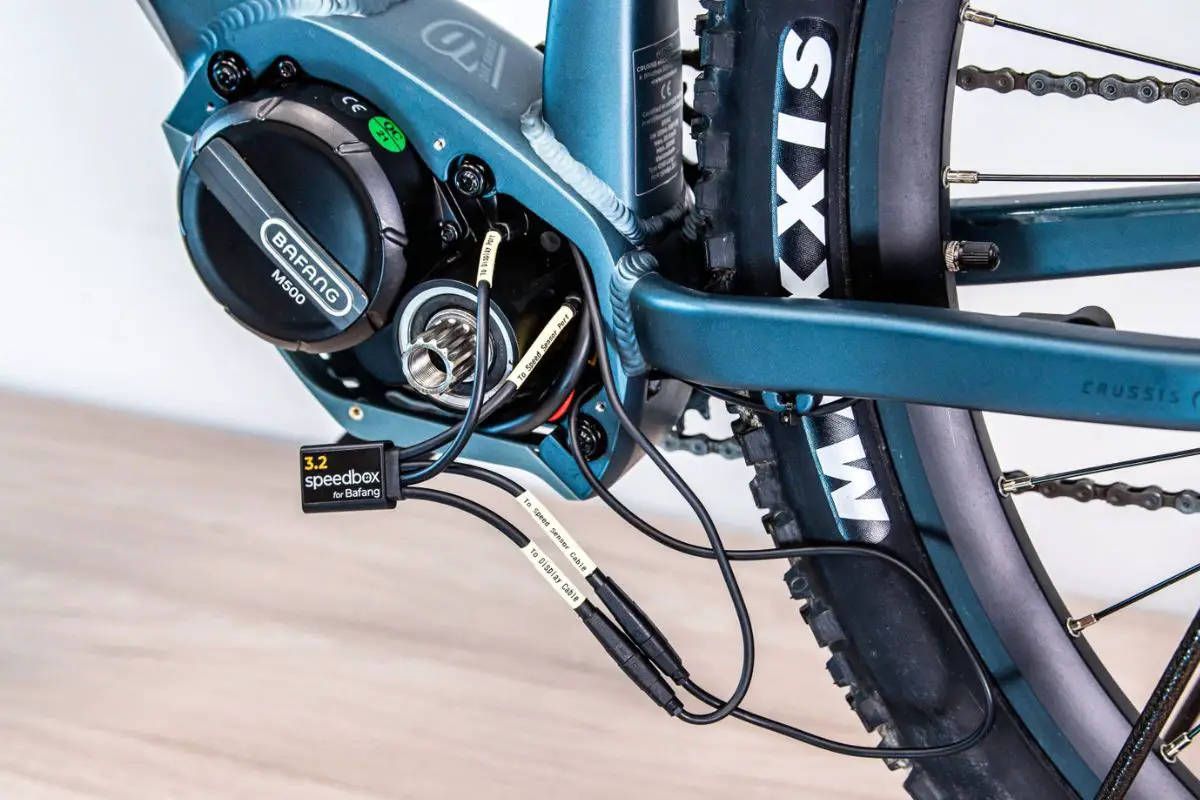
SpeedBox devices function as intelligent signal interceptors, manipulating the communication between your motor’s speed sensor and controller. Understanding this process is crucial for successful installation and troubleshooting.
Signal Manipulation Process
The SpeedBox sits between your motor’s speed sensor and controller, acting as a digital translator that modifies speed data in real-time through intelligent signal processing.
- Signal Reception: Receives actual speed data from wheel sensor
- Data Processing: Applies mathematical reduction to speed signal
- Modified Transmission: Sends reduced speed data to controller
- Controller Response: Controller believes bike is traveling slower, maintains assistance at higher actual speeds
Technical Reality: SpeedBox doesn’t increase motor power. It removes the electronic governor that cuts power at predetermined speeds, allowing access to your motor’s existing capabilities.
Complete SpeedBox Model Compatibility Guide
SpeedBox compatibility depends on precise motor model, communication protocol, and connector type matching. Using an incompatible model results in complete failure or system damage.
SpeedBox Model Overview
What is B.Tuning Mode?
B.Tuning represents the “stealth” version of SpeedBox technology, designed for maximum discretion during operation and installation.
Key Features:
- No visible activation indicators
- Automatic engagement on power-up
- Identical display behavior to stock system
- Enhanced detection resistance
Available Models:
- SpeedBox 3.2 B.Tuning (M200/M410/M500/M510)
- SpeedBox 3.1 B.Tuning (M300/M400/M420)
- SpeedBox 1.3 B.Tuning (Budget option)
Important: B.Tuning models cost 20-30% more than standard versions but offer superior discretion for users in regions with active e-bike enforcement.
Precise Bafang Motor Compatibility
Critical Compatibility Note: Hub motors (front/rear wheel motors) are NOT compatible with SpeedBox devices. SpeedBox works exclusively with Bafang mid-drive motors that use specific communication protocols.
Professional SpeedBox Installation Guide
Proper installation requires precision and attention to detail. Rushed installations often result in error codes, poor performance, or component damage.
Pre-Installation Requirements
| Category | Requirements |
|---|---|
| Tools | T10 Torx wrench, 4mm-6mm Allen keys, clean cloth, protective gloves |
| Environment | Clean, well-lit workspace away from moisture and debris |
| Safety | Battery removed, system powered off completely |
| Documentation | Motor model verified, SpeedBox compatibility confirmed |
Step-by-Step Installation Process
Phase 1: Enhanced System Preparation
- Complete Power Down: Remove battery and wait 30 seconds for capacitor discharge
- Tool Preparation: Organize all tools within reach, ensure adequate lighting
- Motor Access: Remove crank arms using correct extraction tools, clean motor exterior
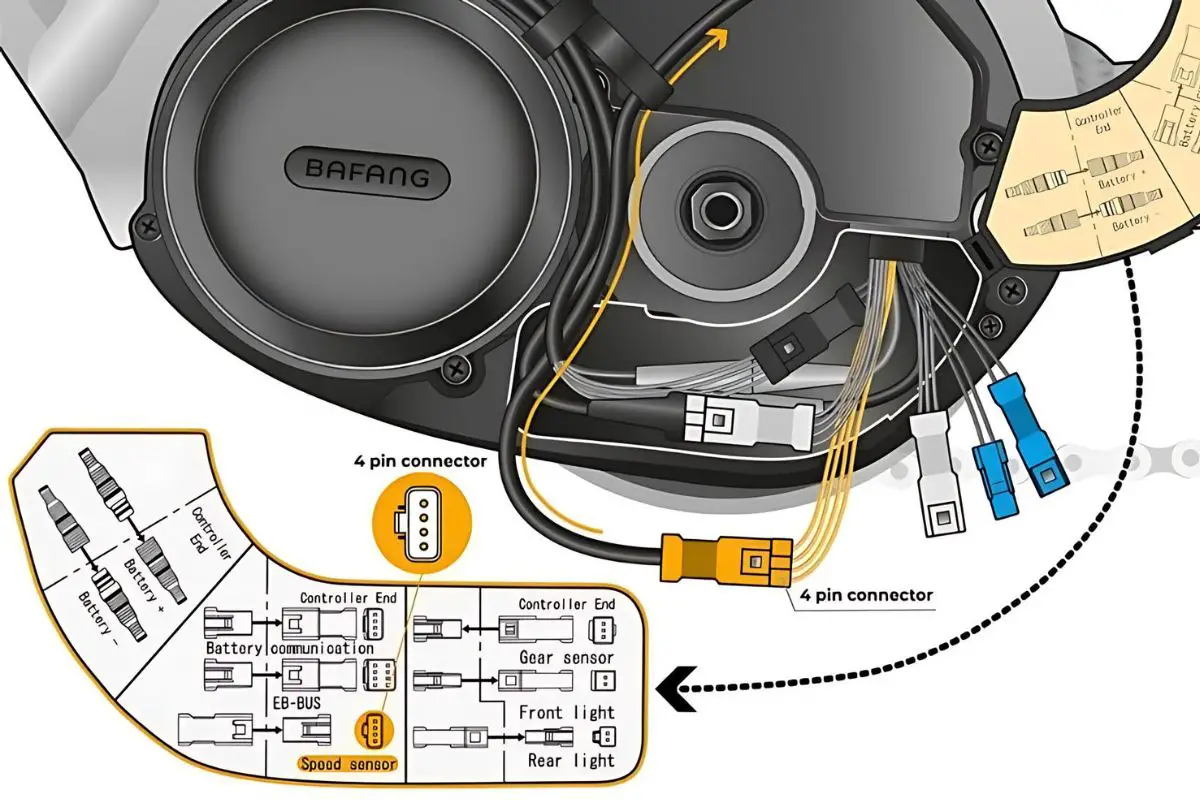
- Connector Location: Identify speed sensor connector inside motor housing (varies by model)
- Documentation: Take detailed photos from multiple angles showing original wiring configuration
- Workspace Setup: Use anti-static mat if available, keep small parts in organized containers
Phase 2: Professional SpeedBox Integration
- Connector Verification: Double-check SpeedBox model matches your motor’s connector type exactly
- Gentle Disconnection: Use proper connector removal technique – squeeze release tabs, never pull on wires
- Contact Inspection: Check both connectors for corrosion, dirt, or damage before connection
- SpeedBox Integration: Connect SpeedBox inline, ensuring click-fit engagement on both ends
- Secure Mounting: Position SpeedBox module away from heat sources, moving parts, and potential water intrusion
- Cable Management: Route cables to prevent pinching during pedaling or steering movements
- Vibration Protection: Use foam padding or cable ties to prevent connector loosening from vibration
Phase 3: Comprehensive System Validation
- Careful Reassembly: Replace motor covers with proper torque sequence – finger tight, then 1/4 turn with tool
- Crank Arm Installation: Apply thread locker if specified, torque to manufacturer specifications
- Power Restoration: Reconnect battery, ensuring positive engagement of all connections
- System Boot Test: Power on system, verify normal display function before activation
- Activation Procedure: Follow model-specific activation sequence precisely
- Multi-Point Testing: Test motor function at various assist levels before full-speed testing
- Safety Check: Verify brake function, proper gear shifting, and display accuracy
- Initial Ride Test: Conduct low-speed test ride in safe area before high-speed operation
Model-Specific Activation Procedures
| SpeedBox Model | Activation Method | Success Indicator |
|---|---|---|
| SpeedBox 1.x | Press LIGHT button on control panel | Headlight icon flashes 3 times |
| SpeedBox 3.x | SpeedBox App or button combination per manual | Display shows 99 km/h briefly |
| B.Tuning Models | Automatic activation on power-up | No visible indication (stealth mode) |
SpeedBox Product Recommendations
Choose the right SpeedBox based on your specific motor model, desired features, and budget. Each model offers different capabilities and compatibility ranges.

SPEEDBOX 3.1 (Bafang M300, M400 & M420)
Third-generation smart chip offering customizable speed limits, real data display, and anti-theft motor lock functionality.

SPEEDBOX 3.2 (Bafang M200, M410, M500 & M510)
Latest generation SpeedBox supporting newest Bafang motor models with advanced CAN Bus communication protocols.
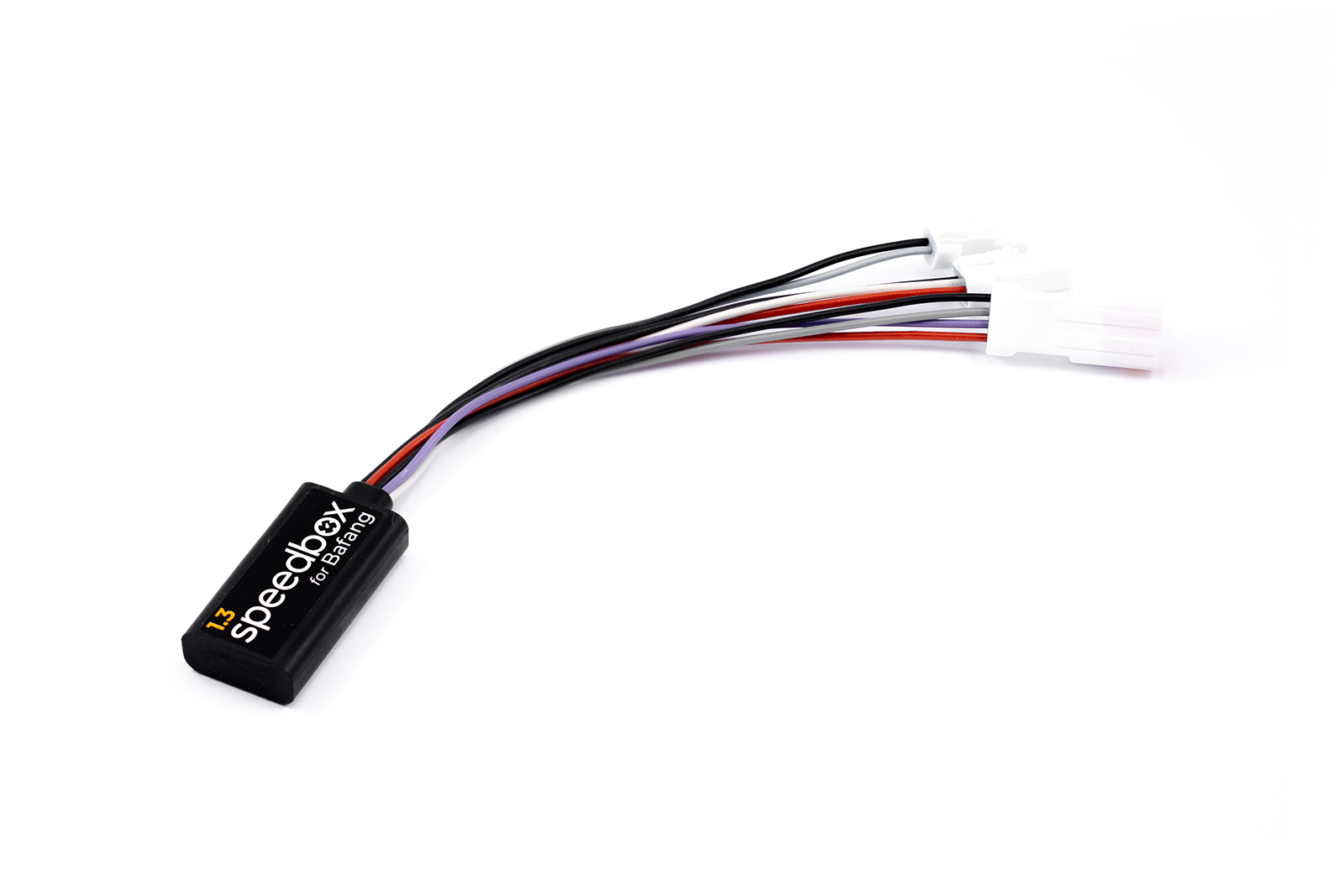
SPEEDBOX 1.3 (Bafang M300, M400 & M420)
Entry-level option doubling assisted speed from 25 km/h to 50 km/h. Ideal for budget-conscious riders seeking basic speed unlock.
Legal & Safety Considerations
Speed modifications carry significant legal and safety implications that extend beyond simple regulatory compliance. These consequences can result in costly mistakes and safety hazards.
Regional E-Bike Speed Regulations & Classifications
Speed modifications change your e-bike’s legal classification, affecting where and how you can legally operate under local regulations.
| Classification | Speed Limit | Legal Requirements |
|---|---|---|
| European Pedelec | 25 km/h (15.5 mph) | No license, registration, or insurance required |
| US Class 1 Pedal Assist | 20 mph (32 km/h) | Pedal assist only, allowed on bike paths |
| Modified E-Bike (28+ mph) | Unlimited | May require registration, license, insurance as motorcycle |
Legal Reality: SpeedBox modifications typically push e-bikes beyond legal speed limits, potentially reclassifying them as mopeds or motorcycles under local law. Research your local regulations before modification.
Reclassification Consequences
Vehicle Registration Requirements
Modified e-bikes exceeding speed limits may be reclassified as mopeds or motorcycles under local regulations, which typically mandate specific requirements.
- Government registration and licensing plates
- Mandatory insurance coverage
- Valid driver’s license for operation
- Compliance with motorcycle safety equipment standards
Warranty and Service Implications
SpeedBox installation typically voids manufacturer warranties across multiple system components.
- Motor and controller components
- Battery systems (if damage related to modification)
- Frame integrity (if installation requires modifications)
- Authorized dealer service support
Mandatory Safety Upgrades
Higher speeds demand significant safety equipment upgrades detailed in our e-bike safety handbook to maintain adequate rider protection.
| Component | Standard Spec | High-Speed Requirement |
|---|---|---|
| Brakes | Mechanical disc brakes | Hydraulic disc brakes with 180mm+ rotors |
| Lighting | Basic LED front/rear lights | High-intensity lighting system with battery indicator |
| Tires | Standard e-bike tires | High-speed rated tires with appropriate pressure ratings |
| Protective Gear | Basic helmet | Certified helmet, protective clothing, visibility gear |
Safety Investment: Budget $200-500 for necessary safety upgrades when increasing e-bike speeds significantly. Component failure at high speeds creates serious injury risks that standard equipment cannot handle.
Troubleshooting Common SpeedBox Issues
Even with proper installation, SpeedBox systems can experience issues. Understanding common problems and their solutions prevents frustration and unnecessary component replacement.
Common Problems & Solutions
| Problem | Possible Cause | Solution |
|---|---|---|
| No Speed Increase | SpeedBox not activated or wrong model | Verify activation sequence, confirm model compatibility |
| Display Error Codes | Connection issues or protocol mismatch | Check all connections, verify UART vs CAN Bus compatibility |
| Intermittent Operation | Loose connections or vibration damage | Secure all connectors, add vibration dampening |
| Motor Overheating | Sustained high-power operation | Reduce continuous high-speed usage, check ventilation |
| Inaccurate Speed Display | Normal behavior with some SpeedBox models | Use GPS speedometer for accurate readings |
Advanced Troubleshooting Steps
System Reset Procedure
- Remove battery and wait 5 minutes for complete system discharge
- Disconnect SpeedBox temporarily
- Reconnect original configuration and test system functionality
- If system works normally, reinstall SpeedBox with fresh connections
- Perform activation sequence again
The Bottom Line on SpeedBox Performance
SpeedBox installation successfully unlocks your Bafang motor’s true potential, typically achieving 35-45 km/h (22-28 mph) sustained speeds. The modification removes the electronic governor limiting speed, allowing access to capabilities your motor already possesses through proper model selection and precise installation.
For riders seeking performance without buying a new e-bike, SpeedBox represents exceptional value at $150-300. However, increased speeds require proportional safety upgrades and carry legal implications that vary by jurisdiction – factor these considerations into your modification decision.
Investment Perspective SpeedBox installation costs $150-300 but unlocks thousands of dollars worth of motor potential. For riders seeking performance without buying a new e-bike, it represents exceptional value when properly implemented.
SpeedBox technology works reliably when properly matched to motor compatibility and installed with precision. Success depends on choosing the correct model for your specific Bafang motor and following professional installation procedures.


