

The TSDZ2B and BBS02B represent fundamentally different approaches to e-bike assistance. One reads your pedal force and matches it proportionally; the other just detects that you’re pedaling and dumps power regardless of effort. Your riding style determines which system feels natural versus which feels like fighting with a robot. Budget systems start around $300-450, premium torque-sensing motors run $1200-1500. Here’s which one actually fits your needs, not just your budget.
Cadence vs. Torque: The Fundamental Split
The Tongsheng TSDZ2B and Bafang BBS02B share similar form factors, installation methods, and price brackets. But their assistance philosophies couldn’t be more different. This isn’t about power levels or top speed, it’s about how the motor responds to your input.
The BBS02B uses cadence sensing, it detects that your pedals are rotating and applies a preset power level. Pedal slowly in PAS 3, get X watts. Pedal fast in PAS 3, still get X watts. The motor doesn’t know if you’re cruising on flat ground or grinding up a 15% grade. It just knows the pedals are moving.
The TSDZ2B uses torque sensing, it measures how hard you push the pedals and multiplies that force. Push gently, get gentle assistance. Lean into a climb and the motor responds proportionally. The motor essentially gives you superman legs rather than acting as a moped with pedal motion detection.
Reality Check Neither system is objectively better. Cadence sensing gives you full power on demand, which matters when you’re hauling cargo or commuting without breaking a sweat. Torque sensing feels more like a traditional bike, which matters when you’re riding for fitness or want subtle assistance. Choose based on how you actually ride, not which sounds more sophisticated.
BBS02B: Brute Force That Doesn’t Care About Subtlety
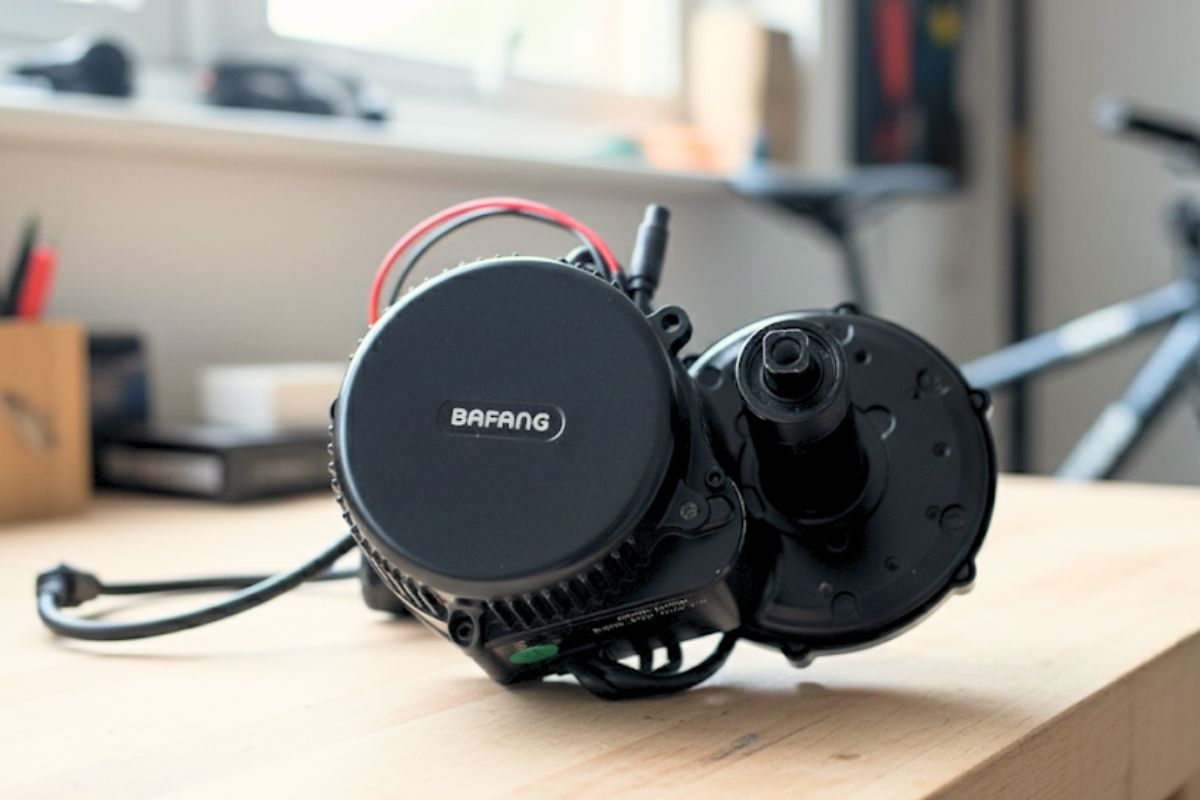
The Bafang BBS02B earned its reputation as the workhorse mid-drive for good reason. It delivers 750W (rated) with peaks around 1200-1300W when you run 25A controllers with a 52V battery. Installation fits most 68-73mm BSA bottom brackets. Price sits around $450-600 depending on seller and accessories.
What Actually Works
The Problems Nobody Mentions Until You Own One
Shop BBS02B Conversion Kits
The proven workhorse for riders who prioritize power and reliability over natural feel

BBS02B 36V 500W
Ideal for lighter riders and urban commuting with excellent battery efficiency
Shop Amazon →
Shop AliExpress →

BBS02B 48V 500W/750W
Maximum power configuration for hills, cargo hauling, and heavier riders
Shop Amazon →
Shop AliExpress →
TSDZ2B: Natural Feel With Important Caveats
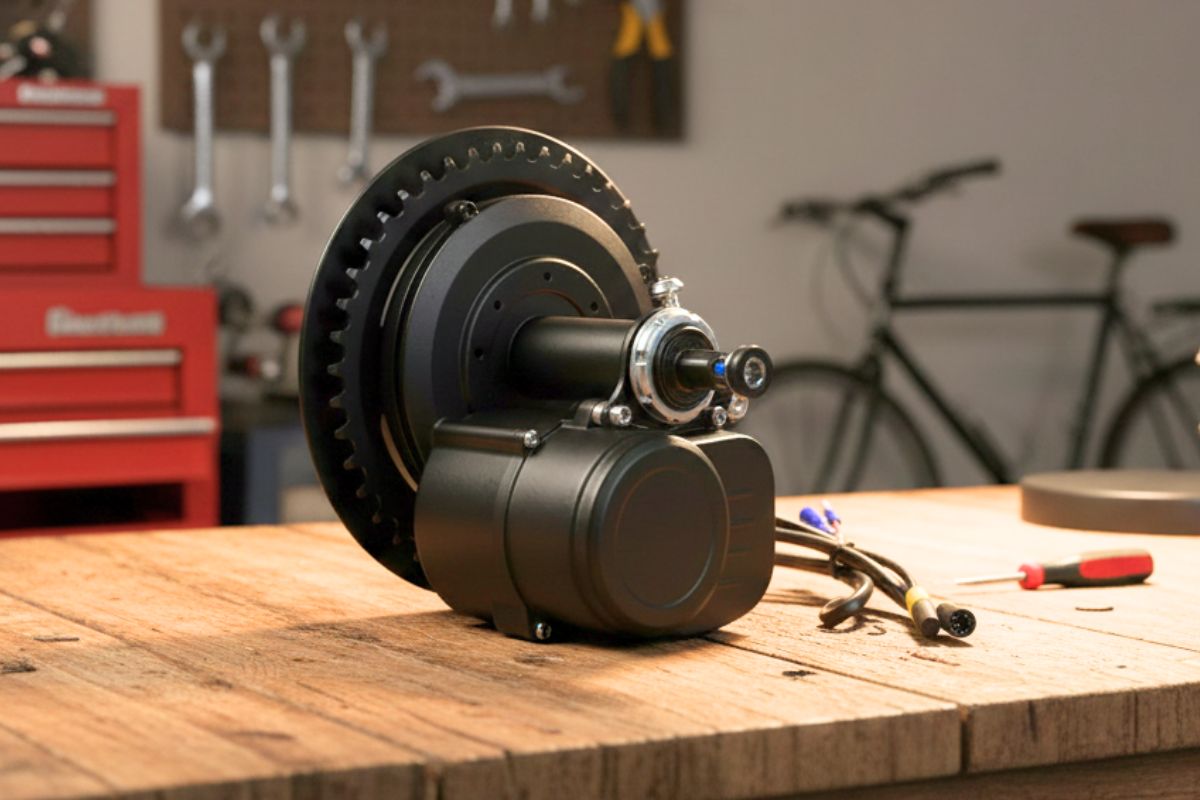
The Tongsheng TSDZ2B brings torque sensing to the budget mid-drive category. Price runs $260-350 for the basic motor kit, or $400-550 for complete kits with premium displays and accessories, depending on voltage (36V 250W or 48V 500W versions). The motor reads pedal force through a mechanical sensor in the bottom bracket spindle, multiplying your effort by the selected assist level.
Why Riders Choose Torque Sensing
Open Source Firmware (OSF): The TSDZ2B benefits from active open-source development. Custom firmware (OSF) dramatically improves the motor’s behavior with adjustable torque curves, field weakening for higher speeds, and smoother assist response. Installing OSF requires technical comfort and a programming cable (~$20), but transforms the riding experience.
Important limitations: OSF voids the motor warranty and limits top speed to about 24 mph on 48V batteries. Many experienced users consider OSF essential to unlock the TSDZ2B’s full potential.
Critical Issues You Must Know Before Buying
Screw Galvanization – Critical Installation Step: The TSDZ2B uses steel screws in an aluminum housing. After several months, these screws can galvanize (corrode together) and become impossible to remove without stripping the heads. This bricks the motor because you can’t access internal parts for repairs.
Prevention (MUST DO during installation): Apply Copaslip grease to all motor housing screws before assembly, and use Blue Loctite on external hex bolts. This simple step prevents a catastrophic failure mode that has bricked many TSDZ2 motors.
Controller Overheating – Cooling Mod ESSENTIAL: The TSDZ2B controller (18A vs. BBS02B’s 25A) overheats during sustained high-power use. Long, steep climbs cause thermal shutdowns where the motor stops assisting until it cools (5-10 minutes).
Multiple users have burned out controllers within weeks without the cooling mod. If you plan to run above 10A or tackle extended climbs, the cooling mod is effectively mandatory, not optional. This particularly affects riders in hot climates or those tackling mountain passes.
Essential Mods for TSDZ2B Reliability
Based on extensive user reports, these modifications significantly improve TSDZ2B longevity:
Before First Ride
- Screw Prep: Apply Copaslip grease to motor housing screws, Blue Loctite to external bolts
- Cooling Mod: Install heatsink cooling plate if running above 10A or in hot climates
- Sealing Check: Verify all cable entry points are properly sealed if riding in rain
- OSF Installation: Flash open source firmware for optimal performance (voids warranty)
Power Limit Recommendations
- Without cooling mod: Maximum 10A to prevent controller burnout
- With cooling mod: Up to 16A safe for sustained use
- Heavy riders (200+ lbs): Consider BBS02B instead for reliability
Shop TSDZ2B Conversion Kits
Budget-friendly torque sensing for riders who value natural pedal feel and efficiency

TSDZ2B 48V 500W
Torque-sensing performance with OSF upgrade potential – requires essential mods
Shop Amazon →
Shop eBay →
Shop AliExpress →
Emerging Alternative: ToSeven DM02
A new player has entered the budget torque-sensing market. The ToSeven DM02 was designed by former Tongsheng engineers and aims to fix the TSDZ2’s known issues. Available since late 2023, it’s building a reputation but lacks long-term reliability data.

What ToSeven Claims to Fix
The Reality Check

ToSeven DM02 48V 500W
Brushless mid-drive motor conversion kit
Shop AliExpress →
Premium Alternatives: When Budget Isn’t The Limiting Factor
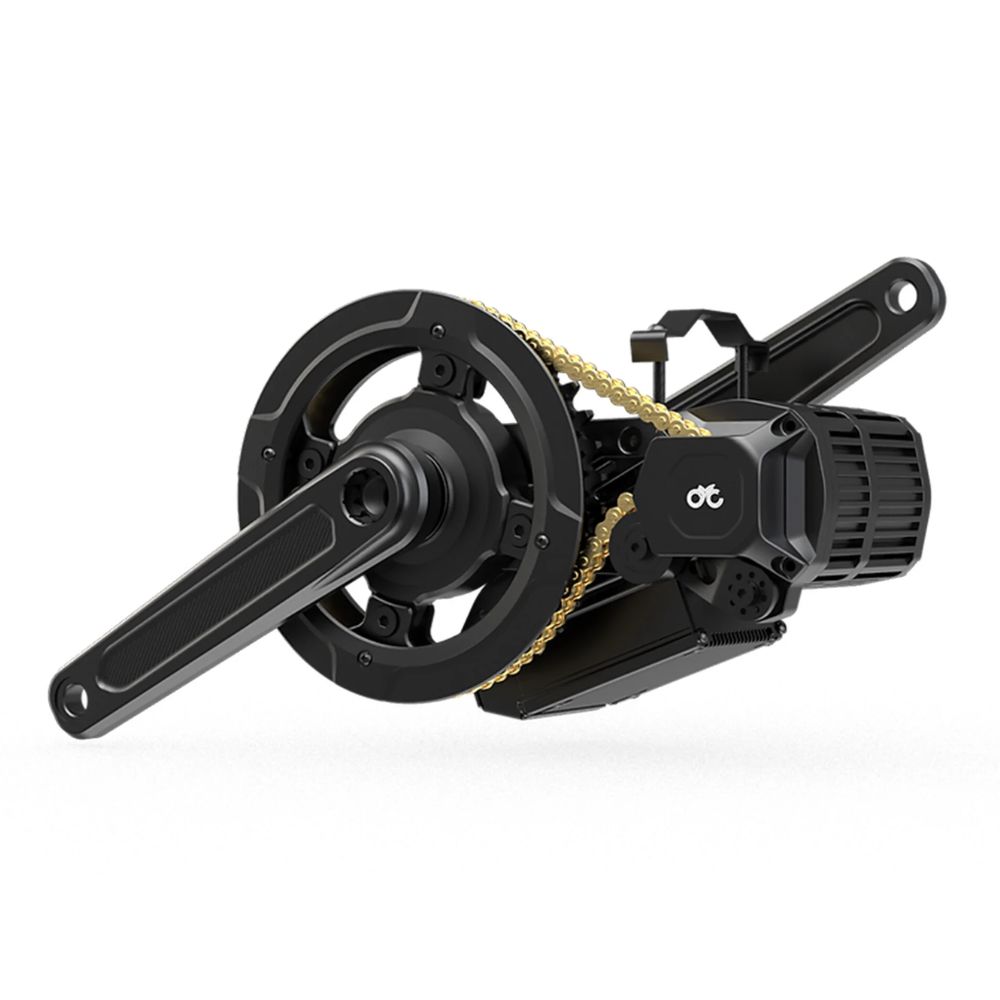
If you’re considering mid-drive conversions and can spend $1200-1500 instead of $450, two options deliver significantly better performance and refinement: the CYC X1 Stealth and CYC Photon. Both use advanced torque sensing, premium components, and professional firmware tuning.
CYC X1 Stealth Gen 3
Specs That Matter
- Rated 1500W, peaks 2000W with appropriate battery
- 150Nm torque at crank (25% more than BBS02B)
- Weight: 2.7kg motor only, 4.5kg with cranks/BB
- ISIS splined cranks for durability under high torque
- Mobile app for complete customization
- Price: $1200-1500 depending on display/accessories
CYC Photon Gen 2

Specs That Matter
- Rated 750W (street legal in most regions)
- 110Nm torque at crank
- Weight: 3.3kg motor only (lightest in class)
- Helical gears for quieter operation
- Splined spindles vs. square taper for longevity
- Price: $1200-1400 depending on configuration
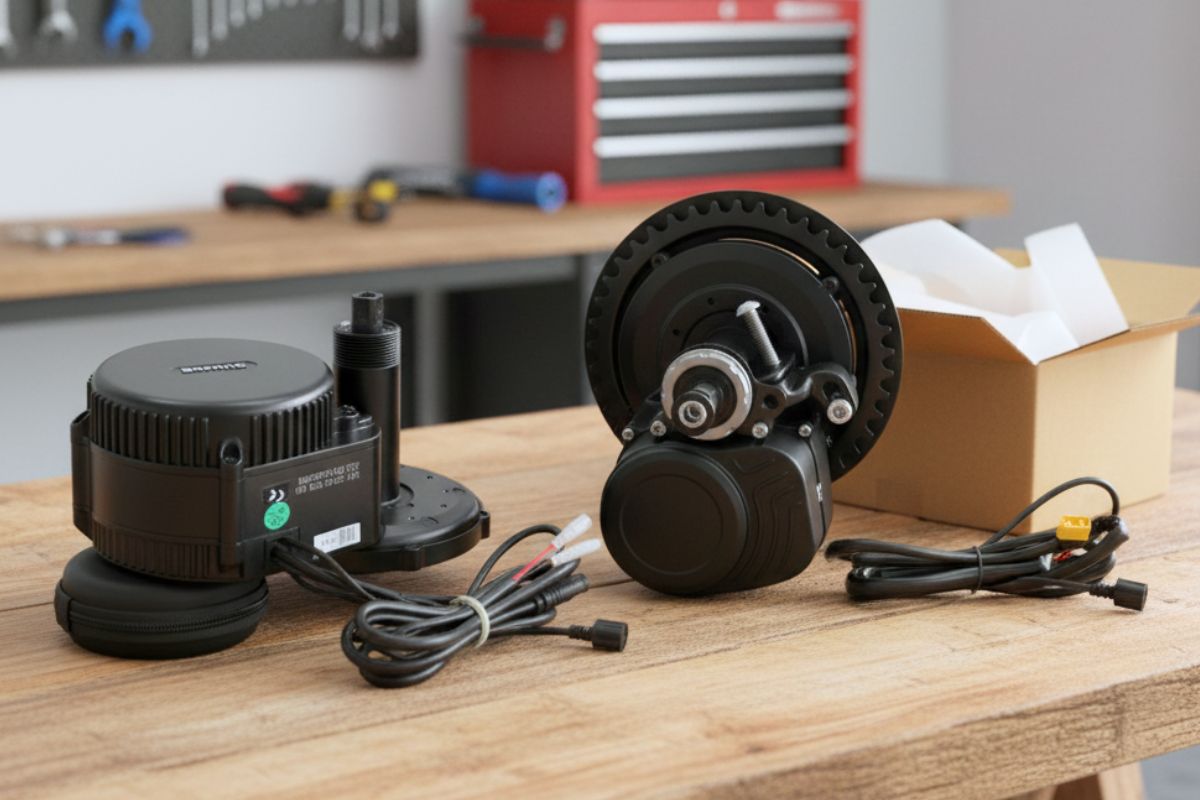
Complete Comparison: Specs Side-by-Side
Numbers tell part of the story. How the motor delivers that power and how long it survives daily use tell the rest.
| Specification | BBS02B | TSDZ2B | ToSeven DM02 | CYC X1 Stealth | CYC Photon |
|---|---|---|---|---|---|
| Price Range | $450-600 | $260-550 | $450-550 | $1200-1500 | $1200-1400 |
| Assist Type | Cadence sensing | Torque sensing | Torque + cadence | Torque + cadence | Torque + cadence |
| Rated Power | 750W | 250-500W | 250-500W | 1500W | 750W |
| Peak Power | ~1300W (25A, 52V) | ~900W (18A) | ~960W (16A, 60V) | ~2000W | ~1100W |
| Torque at Crank | ~120Nm | 80Nm | 90Nm | 150Nm | 110Nm |
| Weight (motor only) | ~4kg | ~3.5kg | 3.7-3.9kg | 2.7kg | 3.3kg |
| BB Compatibility | 68-73mm BSA | 68-73mm BSA | 68-110mm BSA | 68-120mm, BB92 | 68-120mm, Pressfit |
| Throttle Support | Yes | Limited | Yes | Yes | Yes |
| Customization | PC software (free) | Open source firmware | Display programming | Mobile app | Mobile app |
| Waterproof Rating | IP54 (decent) | IP65 claimed | IP65 | IP65 | IP65 |
| Warranty | 1 year typical | 6 months typical | 1 year motor | 2 years | 1-2 years |
| Common Failures | Controller, nylon gear, PAS sensor | Torque sensor, gear, overheat, screw galvanization | Too new for patterns (firmware issues reported) | Too new for pattern | Too new for pattern |
| Track Record | 8+ years proven | 5+ years (mixed) | 2 years (evolving) | 3 years (positive early) | 3 years (positive early) |
Real-World Riding: How They Actually Feel
Specs don’t capture the riding experience. Here’s what these motors feel like during actual use, not on a test stand.

Starting from Stops
Climbing Long Hills
Flat Ground Cruising
Installation Realities: What The Manuals Don’t Mention
Both motors share similar installation requirements, but real-world fitment reveals critical differences that affect frame compatibility and long-term maintenance.
Frame Clearance Issues
Long-Term Maintenance Access
TSDZ2B Advantage: The TSDZ2B disassembles more easily with fewer connection points. Accessing internal components for repairs requires removing the motor from the bike, but the modular design simplifies troubleshooting. The torque sensor, controller, and gears can be serviced separately. Replacement parts from China cost $15-50 for most components.
Critical caveat: Only if you applied Copaslip during installation. Without it, galvanized screws make the motor impossible to service.
The Hub Motor Alternative Nobody Talks About
If you’re commuting on flat terrain, there’s an elephant in the room that mid-drive enthusiasts don’t want to acknowledge.
Inconvenient Truth: For pure flat-terrain commuting, geared hub motors are objectively better than mid-drives. An experienced e-bike mechanic with 12 years in the industry states: “For commuting, the better reliability, lower running cost and more user-friendliness of a hub motor will be much better than any mid-drive, especially if the ride is fairly flat.”
Why Hub Motors Win on Flats
- More efficient: Hub motors were designed for flat-ground efficiency
- More reliable: Fewer moving parts, no drivetrain wear
- Lower maintenance: No chain tension issues, no derailleur stress
- Emergency backup: Chain breaks? Keep riding with throttle
- Direct drive bonus: Regenerative braking and cruise control
When Mid-Drives Matter: Hills, off-road terrain, heavy loads, wanting that “bicycle feel.” For everything else, consider whether you’re choosing mid-drive for actual functional reasons or just because it seems more sophisticated.
Which System Fits Your Riding
The right mid-drive depends on how you actually ride, not which technology sounds more advanced. Here’s the honest breakdown.
Choose BBS02B If:
- You want maximum power on demand without proportional effort
- You’re hauling cargo, carrying passengers, or climbing with heavy loads
- You prefer throttle control for starting and maintaining speed
- You like tweaking settings and want full programming control
- You prioritize proven reliability over cutting-edge features
- You’re a heavier rider (200+ lbs) who needs robust components
- Budget constraints make $450-600 the maximum spend
- You want something that just works without essential mods
Choose TSDZ2B If:
- You want assistance that feels natural and proportional
- You’re riding for fitness and want the motor to enhance your effort
- Battery efficiency matters more than absolute power
- You’re comfortable with open-source firmware for optimal performance
- You’re willing to do essential mods (screw prep, cooling) during installation
- You’re a lighter rider (under 180 lbs) with moderate power needs
- You accept the reliability trade-offs for torque-sensing benefits
- Lighter weight matters (500g less than BBS02B)
- You understand this motor requires preventive maintenance to survive
Consider Hub Motors If:
- Your commute is mostly flat terrain
- You value simplicity and reliability over everything else
- You don’t care about the “natural bicycle feel”
- Lower maintenance costs matter long-term
- You want something that works even when the chain breaks
The TSDZ2B and BBS02B cost similar amounts but deliver completely different experiences. One feels like a powerful bike with an on/off switch, the other feels like a bike with superman legs that respond to your effort. Neither is objectively better—they serve different riders with different priorities and different tolerance for required maintenance.


