

Your Brompton is perfect for urban mobility, but electric assistance transforms it from practical to effortless. Conversion kits promise to electrify your folder for less than buying Brompton’s official electric models, but the reality involves trade-offs most buyers don’t anticipate until after installation. We tested and researched five leading kits to cut through the marketing and show which compromises are worth accepting and which will frustrate you daily.
Why Brompton Conversion Kits Aren’t Simple Upgrades
Conversion kits work, but they fundamentally alter how your Brompton handles, folds, and balances. Front-wheel motors change steering feel, batteries add weight in unexpected places, and some systems sacrifice features like hub gears or front luggage capacity. The official Brompton Electric costs £2,900-£3,500, while conversion kits range from £500-£2,000, but that price gap comes with limitations you need to understand before buying.

Critical Reality Brompton officially states that retrofitting any conversion kit voids your frame warranty. Some kit manufacturers will honor remaining warranty periods, but you’re taking a calculated risk with a £1,000+ bike frame.
The Three Installation Categories
Conversion kits fall into three installation complexity levels, directly affecting whether you can self-install or need professional help.
| Complexity | Kits | Install Time | Main Challenge |
|---|---|---|---|
| Easy | Swytch, Byqee F23 | 15-30 minutes | Pedal sensor alignment |
| Moderate | Boost, Cytronex | 20-45 minutes | Cable routing, bottle bosses |
| Professional Only | ARCC | Must be fitted at Cambridge HQ | Specialized tooling required |
Swytch Kit: The Budget Leader with Service Baggage
What Makes It Popular
The Swytch Kit dominates the budget conversion market for good reasons. At £499-£649, it’s the most affordable option that actually works. Installation takes 30 minutes if you’re methodical, and the 2.84-3.13kg total weight added keeps your Brompton reasonably portable. The Air battery (709g) squeezes 15km range, while the Max battery (1,076g) delivers 30km.

The Handlebar Battery Problem
Mounting 1-1.5kg on your handlebars fundamentally changes how a Brompton steers. The front-heavy weight distribution makes low-speed maneuvering less precise and affects the bike’s legendary nimble handling. You’ll adapt, but the trade-off is real.
Pedal Sensor Installation Reality
The Brompton-specific pedal sensor (extra cost) requires crank arm removal and careful alignment. The universal sensor works but sits exposed and vulnerable on the frame. Getting the 2mm gap correct between sensor and magnet disc requires patience and zip ties.
No Remote Control
Power adjustment happens on the battery itself, not via handlebar controls. This means reaching forward mid-ride to change assistance levels. The interface works but feels outdated compared to competitors with wireless remotes.
| Specification | Details |
|---|---|
| Motor Position | Front Hub |
| Power / Torque | 250W / 40Nm |
| Battery Options | Air (90Wh, 15km) or Max (180Wh, 30km) |
| Total Added Weight | 2.84-3.13kg |
| Charge Time | 3-4 hours |
| Installation | Self-fit, 30 minutes |
| Price | £499-£649 ($625-$815) |
Service and Delivery Issues
Delivery timelines frequently extend beyond initial estimates. Customer service responses can take weeks, and warranty registration proves frustrating for some buyers. The kit itself works, but post-purchase support is inconsistent. Budget accordingly for potential delays and minimal hand-holding.

Swytch Bike Folding Kit
Universal compatibility, easy installation, powerful motor and useful range for commuters. Lightest in class with wonderfully neat design.
Shop Swytch
Shop Amazon
Boost Bike Kit: Rear-Drive Elegance with Limited Range
The Rear-Wheel Advantage
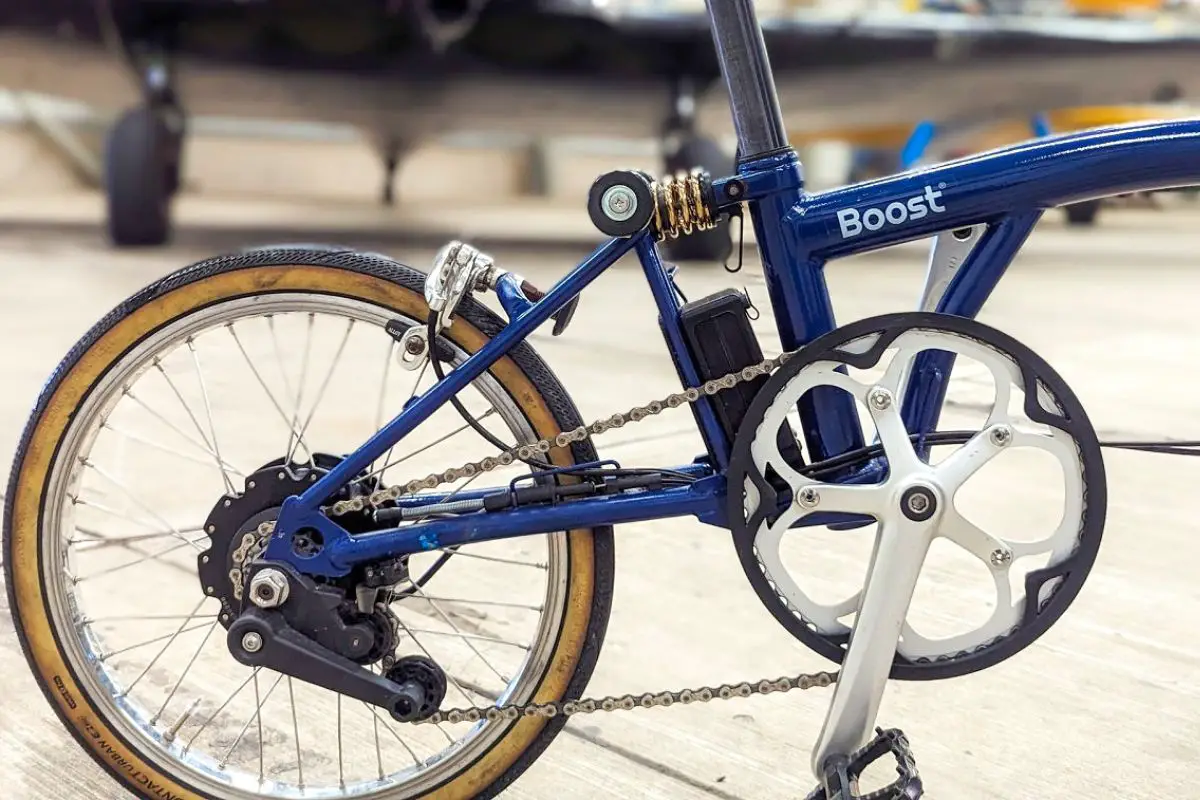
Boost took a different approach by engineering a rear hub motor specifically for Brompton’s narrow 112mm dropouts. This placement maintains the Brompton’s light steering and balanced weight distribution. The 2.5kg kit weight is impressive, and the battery integrates beautifully into the rear triangle behind the seat tube.
Integration and Fold Quality
The Boost system preserves the Brompton’s quick fold completely. The battery stays mounted during folding, and the weight distribution doesn’t compromise carrying. The wireless head unit communicates via Bluetooth, eliminating cable routing issues through the folding stem.
The Hub Gear Sacrifice
Installing the Boost rear hub motor eliminates Sturmey-Archer hub gears. Your Brompton becomes a two-speed (one gear plus the motor). For hilly areas, this means relying heavily on electric assistance. The derailleur remains functional, but you lose the versatility of internal hub gears.
Power Delivery Quirk
The motor’s power curve favors higher speeds. At low speeds on steep hills, assistance feels muted unless you press the Super Boost button. This button override works but requires constant thumb pressure, making sustained climbing awkward. The system excels on moderate inclines and flat terrain but struggles with steep gradients compared to competitors.
Battery Non-Removable for Charging
The battery charges in place, requiring you to bring the bike to the outlet. If you store your Brompton at work or lack convenient charging access, this becomes a daily inconvenience. Competitors offer removable batteries you can charge at your desk.
| Specification | Details |
|---|---|
| Motor Position | Rear Hub |
| Power | 250W |
| Battery / Range | 750g, up to 30km |
| Total Added Weight | 2.5kg |
| Charge Time | 3-4 hours |
| Installation | Self-fit or shop, less than 20 minutes |
| Price | £995 ($1,250) |
Range Expectations The 30km range suits short urban commutes perfectly. Daily 15km round trips leave comfortable battery margin. However, if your commute involves significant hills or you’re carrying cargo, expect closer to 20-25km before recharging.
Cytronex Kit: Premium Engineering at Premium Prices
The Winchester Precision Approach
Cytronex manufactures its system in-house in Winchester, UK, and the engineering quality shows. The marine-grade stainless steel battery release lever operates like functional art. The 3.2kg added weight includes a 180Wh battery (40km range) housed in a water-bottle-style casing that integrates system electronics.

Five Power Levels and Bluetooth Control
The handlebar boost button cycles through five assistance levels (20% intervals) with satisfying precision. The Bluetooth app provides battery monitoring, power customization, and firmware updates. The system’s sprocket movement sensor counts individual teeth for smooth, accurate power delivery.
Cadence vs Torque Sensing Trade-off
Cytronex uses cadence sensing rather than torque sensing. Assistance kicks in about half a second after pedaling starts and has a slight on/off character compared to torque-based systems. It’s smoother than cheap cadence sensors but not as seamlessly progressive as ARCC’s torque system.
Step-Over Height Increase
The battery’s central frame position raises step-over height noticeably. Shorter riders or those with mobility limitations need to evaluate this carefully. The battery can be removed quickly, dropping the bike to near-original weight for lifting onto trains.
| Specification | Details |
|---|---|
| Motor Position | Front Hub |
| Power | 250W |
| Battery / Range | 198Wh, up to 40km |
| Battery Weight | 1.5kg |
| Total Added Weight | 3.2kg |
| Charge Time | 3.5 hours |
| Installation | Self-fit 30-45 min or professional |
| Price | £1,145-£1,200 ($1,250-$1,320) |
Customer Support Excellence
Cytronex provides responsive, knowledgeable support. The Winchester shop offers personal service, and email responses arrive promptly with detailed technical answers. This level of support justifies part of the premium pricing.
Byqee F23: The Turkish Value Proposition
Competitive Pricing with Solid Performance
Byqee burst onto the scene with an aggressive pricing strategy. The F23 Brompton Special won “Mobility Startup of the Year” at Paris Autonomy 2023, and the second-generation kit delivers 45Nm torque for €690-€945 (regular €1,090). The 2.4kg total system weight includes a 1.2kg battery offering 40km range.
Installation Simplicity
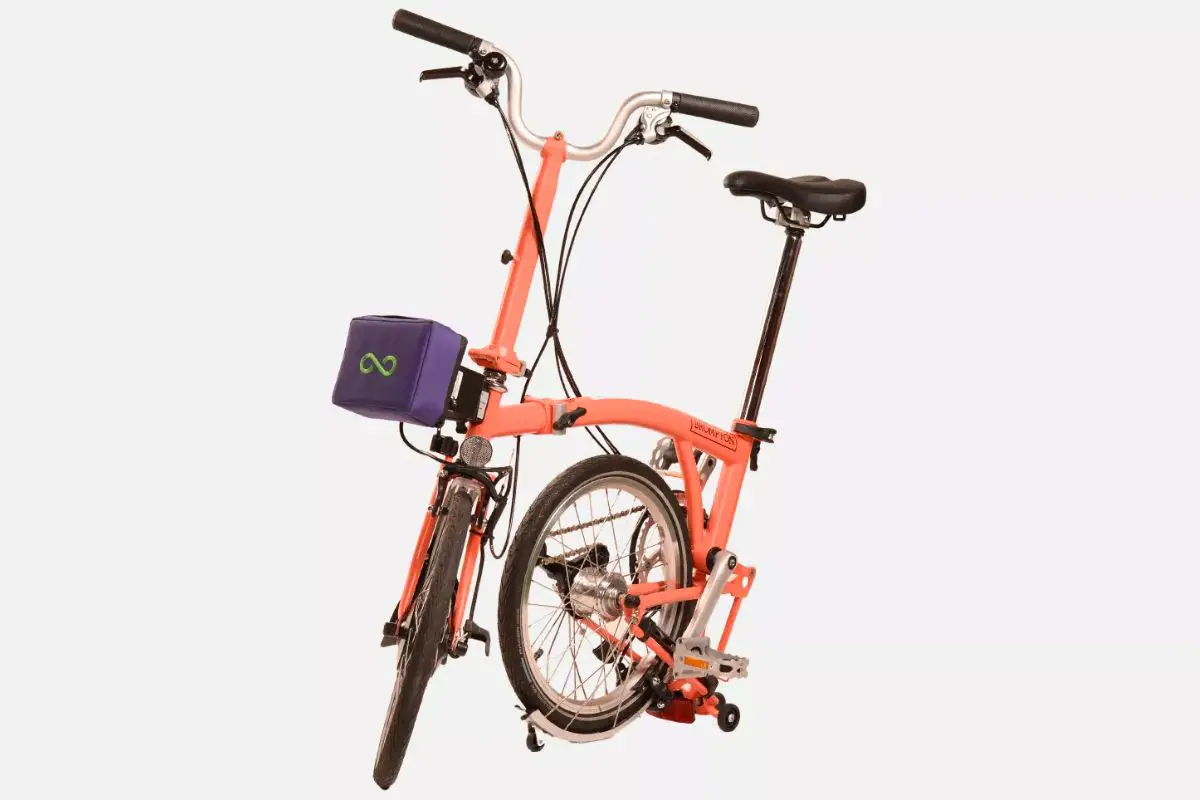
The F23 mounts directly onto Brompton’s standard bag hanger clip. Replace the front wheel, install the bracket, mount sensors, and you’re riding in 15-20 minutes. The battery detaches easily, reducing theft risk when parked.
The 45Nm Question
Byqee advertises 45Nm torque, matching more expensive kits. In practice, the motor handles moderate hills adequately but can’t match Cytronex or ARCC on sustained steep climbs. The 350W peak power (250W nominal) provides decent punch for urban riding but falls short in mountainous terrain.
Limited Track Record
Byqee’s relative newness means fewer long-term reliability reports exist. The company offers standard warranty coverage, but service network and replacement part availability remain question marks compared to established brands. Early adopters report satisfactory experiences, but multi-year durability data is sparse.
| Specification | Details |
|---|---|
| Motor Position | Front Hub |
| Power / Torque | 250W (350W peak) / 45Nm |
| Battery / Range | 237Wh (6.6Ah), up to 40km |
| Battery Weight | 1.2kg |
| Total Added Weight | 2.4kg |
| Charge Time | 3 hours |
| Installation | Self-fit, 15-20 minutes |
| Compatibility | Brompton, Dahon, Carraro, Tern |
| Price | €945-€1,090 ($1,020-$1,180) |
Optional Throttle Mode
Unlike most conversion kits, Byqee offers an optional thumb throttle. This provides walk-assist functionality and pure electric propulsion without pedaling. UK and EU regulations limit throttle-only operation to 6km/h (walking pace), but the feature adds versatility.
ARCC Kit: The Cambridge Engineering Showcase
Formula 1 Tech Meets Folding Bikes
ARCC Innovations manufactures their Intelligent Drive Pod using CNC machines and 3D printers at their Cambridge facility. The system incorporates F1-grade materials (Permaglass wear panels, titanium bolts) and sophisticated electronics. The 250W front hub motor connects to an aluminum pod clamped to the head tube, communicating wirelessly via Bluetooth with a handlebar controller.

Torque Sensing and Automatic Mode
ARCC’s system uses both torque sensing and an inclinometer. The motor responds to pedal pressure instantly, and automatic mode adjusts assistance based on gradient changes. Seven power levels provide granular control, and the system feels closer to mid-drive quality than typical hub motors.
The Battery Capacity Problem
ARCC uses Bosch power tool batteries. The standard 144Wh (4Ah) battery provides only 7 miles range in hilly terrain. Upgrading to the 216Wh (6Ah) battery extends range to 20 miles but costs £200 extra. The 324Wh battery exists but must be purchased separately and adds significant weight. Compared to Cytronex’s 198Wh included battery with 40km range, ARCC’s base specification underwhelms.
Fiddly Button Controls
The Bluetooth controller features small buttons difficult to operate with gloves. In darkness, finding the correct button requires fumbling. The iPhone app provides an alternative interface but excludes Android users. Battery level indication uses color-coded LEDs rather than precise percentage display.
Front Luggage Block Compromise
The pod mounts where Brompton’s front luggage block normally sits. ARCC offers a bag adapter kit that integrates the battery into most Brompton bags, but this solution adds complexity and weight. You’re choosing between full luggage capacity and the ARCC system.

| Specification | Details |
|---|---|
| Motor Position | Front Hub |
| Power | 250W |
| Battery Options | 144Wh (7 miles), 216Wh (20 miles), 324Wh |
| Battery Weight | 1.3kg (216Wh) |
| Motor Weight | 2.6kg |
| Total Added Weight | 3.9kg |
| Charge Time | 3-4 hours |
| Installation | Professional only at Cambridge HQ |
| Compatibility | A Line, C Line, P Line, T Line |
| Price | £1,899+ ($2,400+) |
Five-Year Warranty ARCC backs the system with a five-year warranty and will honor remaining Brompton frame warranties on bikes they convert. This coverage is exceptional for conversion kits and reflects confidence in long-term durability.
Performance Comparison: Hills, Range, and Weight
The Weight and Range Trade-off
| Kit | Added Weight | Range | Hill Performance | Price |
|---|---|---|---|---|
| Boost | 2.5kg | 30km | Good (with Super Boost) | £995 |
| Byqee F23 | 2.4kg | 40km | Adequate | €945 |
| Swytch Max | 3.13kg | 30km | Good | £649 |
| Cytronex | 3.2kg | 40km | Excellent | £1,145 |
| ARCC (144Wh) | 3.9kg | 11km | Excellent | £1,899 |
Motor Position & Handling Effects
Front hub motors (Swytch Bike, Byqee, Cytronex, ARCC) change steering weight and can spin on wet surfaces during aggressive starts. Rear hub drive (Boost) maintains Brompton’s nimble steering but eliminates hub gears. The trade-off is real either way.
Wet Weather Traction
Front-wheel drive systems can break traction on wet manhole covers or painted road markings when accelerating hard. Throttle control and smooth pedaling mitigate this, but rear-drive Boost eliminates the issue entirely by driving the weighted rear wheel.
The Value Calculation: Which Kit Makes Sense
Budget Commuter: Swytch or Byqee F23
For flat urban commutes under 15km, the Swytch Air (£499) or Byqee F23 (€690 on sale) deliver electric assistance at minimal cost.
Accept the front-heavy handling, DIY installation quirks, and limited customer support. These kits transform your Brompton adequately if you’re not demanding perfection.
Balanced Performance: Boost or Cytronex
Spending £995-£1,145 gets you genuinely refined systems. Boost excels if you prioritize lightweight elegance and can accept 30km range plus the hub gear sacrifice.
Cytronex delivers superior range (40km), excellent customer support, and refined power delivery but costs more and increases step-over height.
Premium Engineering: ARCC
At £1,899+, ARCC makes sense only for enthusiasts valuing torque sensing and automatic gradient compensation over range and cost efficiency.
The base battery’s 11km range is laughable at this price point. Budget £2,100+ for the 216Wh battery to get usable 30km range, which still underperforms Cytronex at lower total cost.
Against the Official Brompton Electric
Brompton’s C Line Electric (£2,900) weighs 17.4kg with 300Wh battery and 45-mile range. A conversion kit on a used £750 Brompton totals £1,250-£2,650 depending on kit choice.
The conversion route saves £250-£1,650 but requires installation, voids warranty, and may introduce reliability questions. For buyers prioritizing warranty and integrated design, Brompton’s official electric remains compelling despite the premium.
Official Brompton Electric vs Conversion Economics

The Real Cost Comparison
Before committing to a conversion kit, examine what Brompton’s official electric models offer. The price gap narrows considerably when you factor in warranty coverage, integration quality, and resale value.
| Model | Weight | Battery/Range | UK Price | US Price |
|---|---|---|---|---|
| P Line Electric 4-speed | 15.6kg (with battery) | 300Wh / 32-72km | £3,699 | ~$4,950 |
| P Line 4-speed | 9.99kg | N/A | £2,429 | ~$3,250 |
| P Line Electric 12-speed | 16.6kg (with battery) | 300Wh / 32-72km | £4,099 | ~$5,485 |
| P Line 12-speed | 10.5kg | N/A | £2,609 | ~$3,490 |
| C Line Electric 12-speed | 17.3kg (with battery) | 300Wh / 32-72km | £3,150 | ~$4,215 |
| C Line 12-speed | 12kg | N/A | £1,599 | ~$2,140 |
| G Line Electric 4-speed | 19.5kg (with battery) | 345Wh / 32-72km | £3,499 | ~$4,685 |
| G Line 8-speed | 14.8kg | N/A | £2,499 | ~$3,345 |
The Conversion Math
Take a used C Line 12-speed (£750-£1,000) plus Cytronex kit (£1,145) = £1,895-£2,145 total. The official C Line Electric costs £3,150, meaning you save £1,005-£1,255 with a conversion kit.
However, the official model provides full warranty coverage, integrated design, dealer support network, and significantly better resale value. New riders often find the premium worthwhile, while experienced Brompton owners comfortable with DIY modifications benefit most from conversion savings.
Weight Reality Check
Official Brompton electrics add 4.7-5.6kg over their non-electric equivalents (P Line Electric adds 5.6kg, C Line Electric adds 5.3kg, G Line Electric adds 4.7kg).
Quality conversion kits add 2.4-3.9kg but use smaller batteries. Brompton’s 300-345Wh batteries provide genuine 40-72km range with predictable performance, while most conversion kit batteries (90-237Wh) deliver 15-40km.
You carry less weight with conversion kits but accept significantly reduced range and battery longevity questions.
Bottom Line: Match Kit to Riding Reality
Conversion kits work, but none delivers the seamless integration of a purpose-built electric Brompton. Choose based on your specific priorities rather than pursuing the “best” kit.
Best Value
Swytch (£499-£649) or Byqee F23 (€690-€945) for budget-conscious commuters accepting compromises
Best Integration
Boost (£995) for lightweight rear-drive elegance, accepting 30km range limitation
Best Overall
Cytronex (£1,145-£1,200) balances range, quality, support, and refined power delivery
Best Technology
ARCC (£1,899+) for torque sensing sophistication if cost matters less than engineering refinement
No conversion kit perfectly replicates your Brompton’s original handling and folding simplicity. Every system involves trade-offs in weight distribution, range, features, or cost. Test ride before buying if possible, and remember that voiding your Brompton warranty is part of the conversion equation.<


